
Having a dog and a pool in the same backyard is pretty common in Florida. For the most part it works fine. Dogs cool down, they get some exercise, and a lot of them genuinely enjoy being in the water. But there are real safety considerations that do not always get much thought until something goes wrong.
This guide covers what pool owners with dogs need to know, from whether your dog is actually suited to swimming, to what happens to the water after they have been in it, and how to set up the backyard so the pool is safe whether you are watching or not.
The idea that dogs are natural swimmers is not entirely accurate. Some breeds handle water with no trouble at all. Others sink faster than you would expect.
Breeds like Labradors, Golden Retrievers, and Spaniels tend to swim naturally and can handle themselves in a pool without much help. But stocky, heavy-set dogs like Bulldogs and Pugs are a different story. Their body shape works against them in water. Short legs, barrel chests, and flat faces make it physically hard to stay afloat and to breathe properly while swimming. The same goes for Dachshunds, Corgis, and similar low-to-the-ground breeds. Age matters too. Puppies and older dogs tire quickly, and dogs with arthritis or hip problems can find the movement of swimming painful even if they do not show it clearly.
Most people assume the danger is a dog swimming until it gets too tired and goes under. That does happen, but it is not the most common cause of dog drownings in pools.
The more frequent scenario is a dog that ends up in the water unexpectedly, either by falling in or jumping in from an unfamiliar part of the yard, and then cannot work out how to get out. Dogs in that situation tend to swim toward the wall and follow the wall rather than turning back toward the steps. They keep circling rather than finding the exit. In a pool with vertical walls and a single step entry at one end, a panicking dog can exhaust itself in minutes going around the perimeter. This is why teaching the exit point matters far more than whether the dog can swim.
Before a dog swims freely in the pool, spend time specifically on the exit. It is the single most important thing to do.
Start by lowering the dog into the water near the steps and letting them climb out on their own. Do that several times from the same spot. Then move to a different part of the pool and see if they can find their way back to the steps from there. Keep repeating until the dog goes straight to the steps regardless of where they enter the water. This is especially important in pools with non-standard exits like beach entries or wide shallow ledges, where the shape of the exit is less obvious to a dog that is stressed or disoriented.
A dog that has access to the pool without anyone around is a risk. This is true even if the dog swims well and knows where the steps are.
A fence around the pool area with a properly latching gate removes that risk entirely. It does not need to be elaborate. What matters is that the dog cannot get into the pool area on its own. Check the fence line from low down, not just standing height. Small breeds can get through gaps that look completely fine when you are standing up. Gates that swing closed on their own are more reliable than ones that need to be pulled shut manually.
A dog-specific flotation vest is worth having for breeds that are not natural swimmers, dogs that are new to the pool, or older dogs that tire more easily than they used to.
A vest does not replace supervision or training. It is an additional layer of safety, not a substitute for either.
Dogs tend to push past their limits in the pool, particularly when they are stimulated or chasing something in the water. They do not pace themselves the way a human swimmer might.
Watch for these signs that a dog needs to come out:
Keep sessions short when a dog is new to the pool. Five to ten minutes is enough for the first few swims. Build up gradually over several sessions rather than letting the dog swim until it decides to stop.
Two things are worth doing after every swim session.
First, rinse the dog off with a garden hose or outdoor shower before it goes inside. Chlorine sitting in the coat long term can cause skin dryness and irritation with repeated exposure. Second, dry the ears. Water trapped in a dog’s ear canal after swimming is one of the most common triggers for ear infections. A quick dry with a towel after each swim is usually enough. Dogs that swim frequently and tend to get ear infections may benefit from a vet-recommended ear drying solution used after each session.
A dog in the pool affects the water differently than a person does. The combination of coat, skin oils, dander, and whatever the dog has rolled in outside introduces organic material into the water at a higher rate than a human swimmer. Chlorine reacts with all of that material and gets used up faster as a result.
After a session where the dog has been swimming, it is worth testing the water rather than waiting for the next scheduled check. Free chlorine levels can drop enough after a single extended dog swim to require adjustment. The filter also works harder during these periods. If the pool is going cloudy more often during summer and the dog is swimming regularly, those two things are probably connected. Cleaning or backwashing the filter more frequently during peak dog swimming season helps keep on top of it.
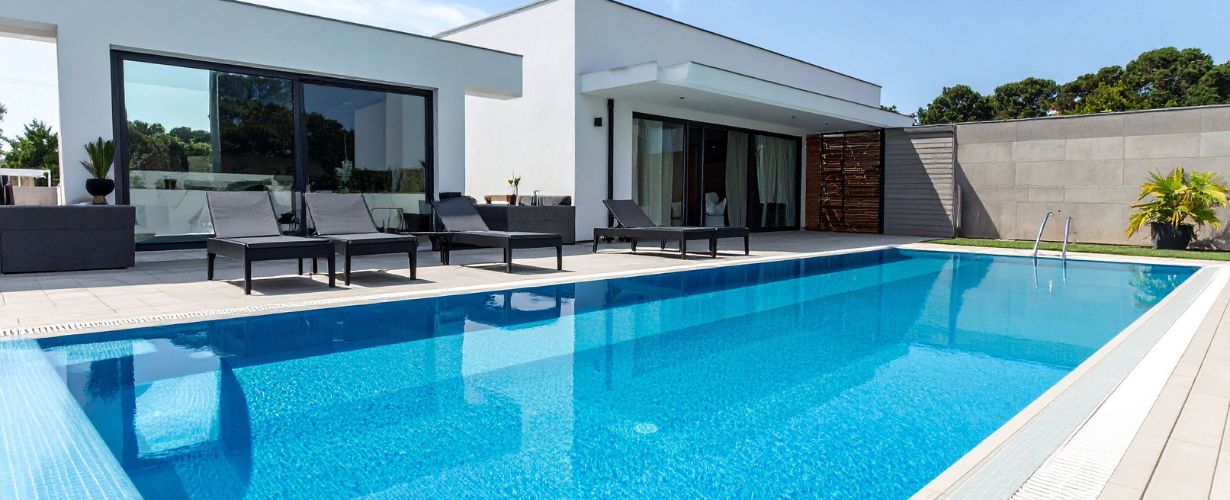
A dog should not be swimming in water that has not been properly maintained. Algae in particular is a concern. While algae itself is not always directly harmful, certain types, especially blue-green algae, are toxic to dogs and can cause serious illness after even brief contact. A dog that drinks from a pool with blue-green algae in it can become very sick very quickly.
Beyond algae, pools with low chlorine and high bacterial load are as problematic for dogs as they are for people. If the water is off-colour, has an unusual smell, or the chemistry is known to be out of balance, keep the dog out until it has been treated and retested. Chemical containers stored near the pool equipment should be in sealed containers with lids that a dog cannot knock open or chew through.
Most of the risk around dogs and pools is manageable with a bit of planning upfront. Know whether your breed is suited to swimming. Teach the exit before anything else. Fence the pool area properly. Watch for signs of tiredness and keep early sessions short. Check the water after the dog swims.
None of it is complicated once you know what to look for. If the pool itself has condition issues that need sorting, whether that is a deteriorating surface, a fencing gap, or ongoing water quality problems, the team at Epic Watershapes handles pool repairs and resurfacing across Boca Raton, West Palm Beach, Jupiter, and Palm Beach County.