
There’s a moment in every South Florida backyard makeover when everything finally comes together—the contractor drives away for the last time, the tools are put away, and the dust settles. You stand there, looking at your brand-new pool—one that cost more than your first car—and think: Now what?
Here’s the thing no one tells you while you’re choosing tiles and signing contracts: a pool without thoughtful landscaping is just an expensive hole filled with water. Landscaping is what turns a pool into a retreat, a simple amenity into a full experience, and a backyard you own into a place that captures your imagination.
Data from the industry is clear: pools with little to no landscaping are used far less after the first summer. On the other hand, homes that dedicate 20–30% of their pool budget to smart landscaping see more daily use, more entertaining, and far better photos for resale. The difference is striking—it’s what separates a simple feature from a true destination.
Smart pool landscaping matters. In West Palm Beach and across South Florida, where the growing season is year-round but summers are scorching, occasional cold snaps happen, and soil ranges from sandy to almost rock-like, getting your landscaping right takes more than just picking pretty plants from a nursery.
Most people think pool landscaping is just about looks—curb appeal, the cherry on top. But that’s only part of the story.
Good pool landscaping is functional design. It solves problems you didn’t even realize existed until you spent a few months living with a pool.
Privacy without feeling closed in. You don’t want your neighbors watching your Saturday pool parties, but you also don’t want to feel trapped behind walls. Smart plant choices create visual privacy while keeping your backyard open and inviting—the kind of space that makes Florida living so enjoyable.
Shade in a hot climate. From May through September, the South Florida sun can be brutal. The wrong trees will drop leaves and debris into your pool, creating more work than relief. The right plants give shade and comfort without adding a maintenance headache.
Softening hard edges. Pools are all hard surfaces—concrete, tile, decking. Without plants to soften the space, your backyard can feel cold and impersonal, like a hotel pool instead of your home.
Creating a comfortable microclimate. Plants cool the air, block wind, and absorb sound. Research from the University of Florida shows that a well-landscaped pool area can be 10–15 degrees cooler than a plain, hardscaped backyard—a big difference when you want to enjoy a West Palm Beach summer without retreating indoors.
Supporting wildlife that helps you. The right plants attract dragonflies (mosquito control), butterflies (visual enjoyment), and birds (natural pest control). They turn your backyard into a lively, interesting ecosystem.
This isn’t just decoration. It’s thoughtful design that makes your outdoor space more comfortable, beautiful, and enjoyable.
This is where most pool landscaping dreams fall apart: someone sees pictures of California or Mediterranean-style gardens, tries to copy them in Zone 9b, and ends up watching their plants die or their investment fail within a season.
Florida plays by its own rules. Follow them—or be prepared to pay the price over and over.
The heat is intense. We’re not just talking about “summer warmth.” Think 95-degree days with 80% humidity, where the sun bounces off pool decks and cooks plants from above and below. Anything that normally needs “partial shade” elsewhere likely needs full shade here. Plants labeled “heat-tolerant” in other regions may still struggle unless they’re made for subtropical conditions.
The soil can be tricky. In West Palm Beach and Palm Beach, sandy soil drains too fast and has few nutrients. In places like Boca Raton or Wellington, clay or limestone soils drain too slowly. Either way, your soil needs regular, heavy improvement. Treat soil care like you would pool chemicals—it’s not optional, it’s essential.
Cold snaps happen. Even in Florida, nights can drop into the 30s, which can harm or kill tropical plants that looked great just a few weeks earlier. The smart approach is to use cold-hardy plants as your foundation, then add tropicals you’re ready to protect or replace if needed.
Drainage is everything. Your pool sits at the lowest point of your yard. When a typical South Florida afternoon storm dumps two inches of rain in thirty minutes, water rushes toward the pool. Plants that hate “wet feet” will die, mulch can wash away, and hardscaping may shift. Every landscaping decision must account for drainage—or watch your investment literally wash away.
Let’s be honest: most of the “best plants for pool landscaping” lists you see online won’t work well here. Those guides are written for a national audience, not for South Florida’s unique mix of heat, humidity, sandy soil, and occasional freezes.
Here’s what actually thrives around pools in South Florida:
For Privacy and Screening:
For Shade Without Mess:
For Color and Texture at Pool Level:
For Ground Cover and Bed Fillers:
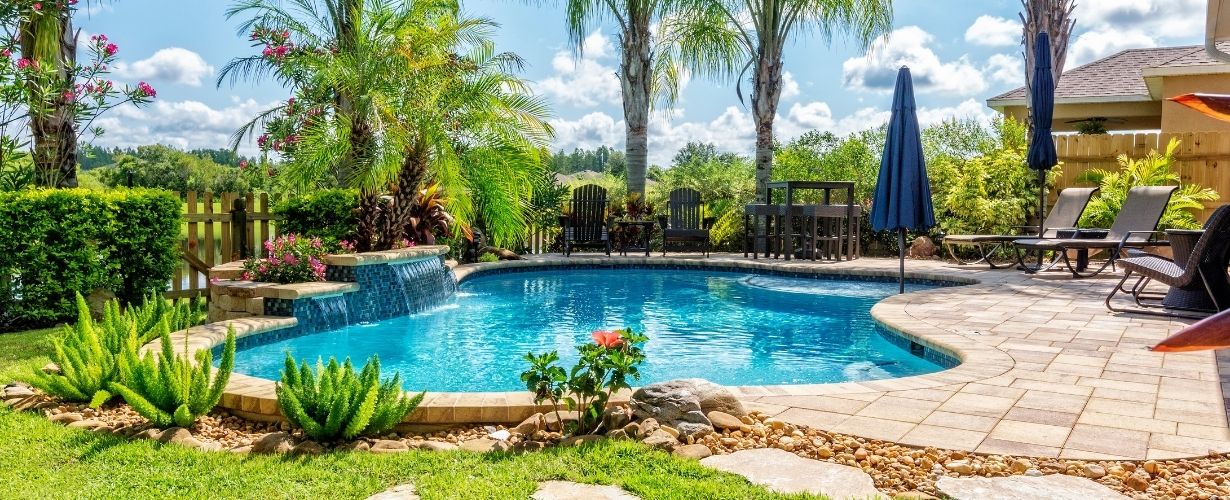
This is where landscaping goes from “we just planted some stuff” to “we crafted a real outdoor environment.”
Your pool deck, coping, and surrounding hardscape form the backbone of the space. Plants soften those edges, but the key spots—where concrete meets soil, where built elements meet nature—decide if your backyard feels thoughtfully designed or just thrown together.
Dry creek beds are a smart solution with multiple benefits. They manage stormwater during South Florida’s heavy summer rains, look interesting even when dry, and let you add river rocks and boulders that give texture and scale. In West Palm Beach’s newer, flat neighborhoods, a well-placed dry creek bed can move water away from your pool foundation while looking intentional rather than purely functional.
Paver borders between planting beds and pool decking help keep mulch in place, cut down on weeds, and create clean lines that make landscaping feel polished—even if it isn’t professionally done. These borders are especially useful in established West Palm Beach neighborhoods, where a neat, finished look can boost property appeal.
Boulder placement is an art. Large boulders can anchor corners, add height and variation to flat yards, regulate temperature swings, and provide surfaces that stay cool enough to sit on in the summer sun. On bigger estates in West Palm Beach, boulders can make a dramatic visual impact.
Raised planters are a great fix for South Florida’s challenging soil. They let you control the growing conditions, create seating areas, define spaces, and allow you to try plants that wouldn’t survive in native soil. They warm up faster in winter, drain well in summer, and make garden care easier as you get older—making them a smart choice for long-term outdoor living.
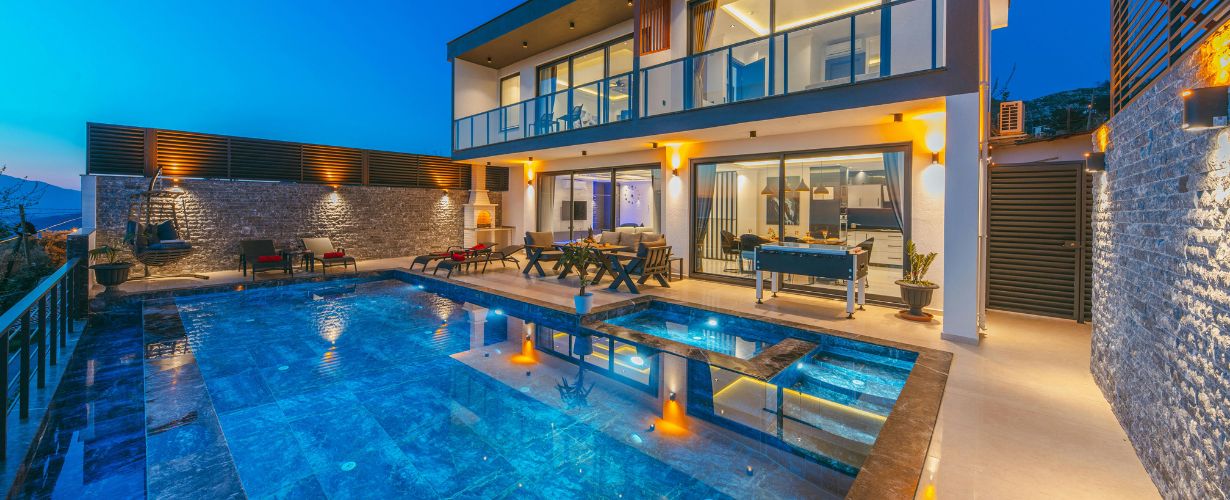
This is where good pool landscaping turns into something extraordinary. Where ordinary becomes unforgettable.
Most people light their pools, but few pay attention to the landscaping around them—and that’s a big mistake that can ruin the nighttime vibe.
Uplighting palm trees adds drama and draws the eye upward, making your backyard feel bigger after dark. Place LED lights at the base of royal palms or sabal palms, and you’ll see those resort-style shadows dancing across the fronds. It’s what turns “we have a pool” into “we have a destination.”
Path lighting isn’t just about safety—though that’s important too. It’s about adding layers and depth that guide the eye through your space. Small, low lights tucked among bromeliads and ornamental grasses make evening walks around your pool feel calm and immersive rather than just practical.
Highlighting special plants gives you points of focus that work day and night. That gumbo limbo tree with striking bark? Light it from below and it becomes a living sculpture. Those clusters of bamboo that give you privacy? Backlight them and they glow like delicate, translucent art.
Color temperature matters more than most people realize. Warm white lights (2700–3000K) create a cozy, relaxed feeling. Cool whites (4000K+) feel more clinical. Your pool lights can be a crisp blue to make the water sparkle, but your landscape lighting should be warm to create a welcoming contrast.
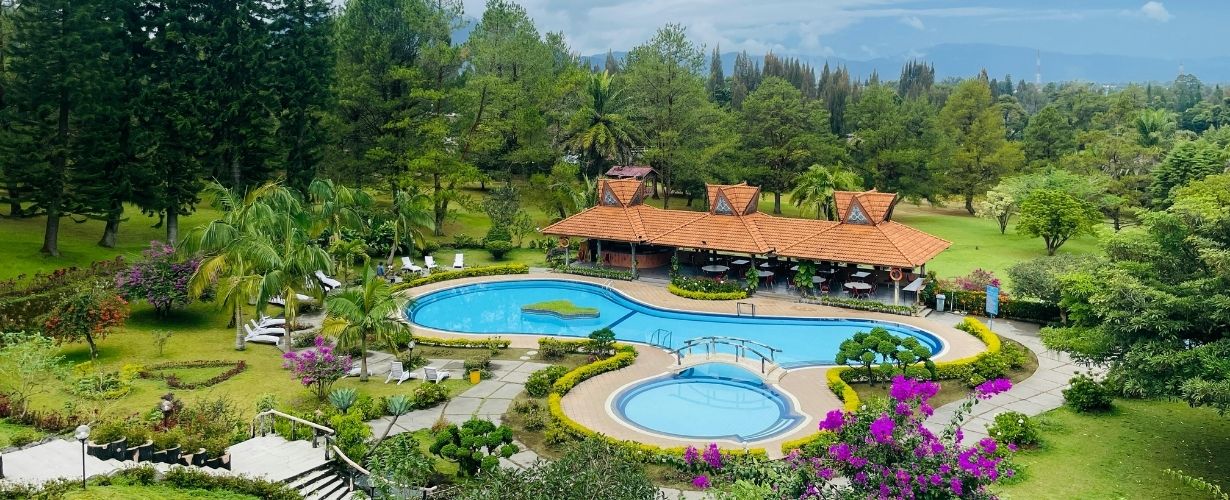
Let’s get real: pool landscaping needs ongoing care. Not constant, not stressful—but it does need attention.
In South Florida, irrigation is essential if you want your plants to thrive instead of just survive. Rainfall here is plentiful but unpredictable—sometimes it pours, sometimes it’s dry. A good irrigation system pays for itself by saving you money on plant replacements, reducing water waste, and keeping you out of the 95-degree sun hand-watering.
Upgrading to smart controllers that adjust for rainfall and temperature is worth it. Set up irrigation zones so thirsty plants get more water, while drought-tolerant plants get less. And don’t skip winterizing your system—otherwise, you could be facing burst pipes in February.
Mulch needs refreshing 2–3 times a year because the heat and humidity break it down faster here. Most pool landscapes cost around $500–$800 per year for mulch. Stick to quality hardwood or cypress mulch rather than cheap pine—it lasts longer, looks better, and doesn’t turn into a water-repellent layer that defeats the purpose.
Seasonal pruning and trimming keep your landscaping looking intentional. Clumping bamboo should have dead canes removed yearly. Podocarpus hedges need shaping three times a year. Ornamental grasses do best when cut back in late winter. If you do it yourself, plan for 4–6 hours a month, or budget $150–$250 per month for professional care.
Fertilizing depends on your plant types, but most pool landscapes benefit from slow-release fertilizer applied 3–4 times a year. Lighter, more frequent feedings work better than occasional heavy doses. Be careful to avoid fertilizer drifting into the pool—phosphates and nitrates fuel algae, which is the last thing you want.
Plant replacement is part of life in Florida. The climate is tough, cold snaps happen, and irrigation failures occur. Plan to spend 10–15% of your original landscaping budget annually on replacements and repairs. It’s not a failure—it’s just part of maintaining a beautiful pool landscape.
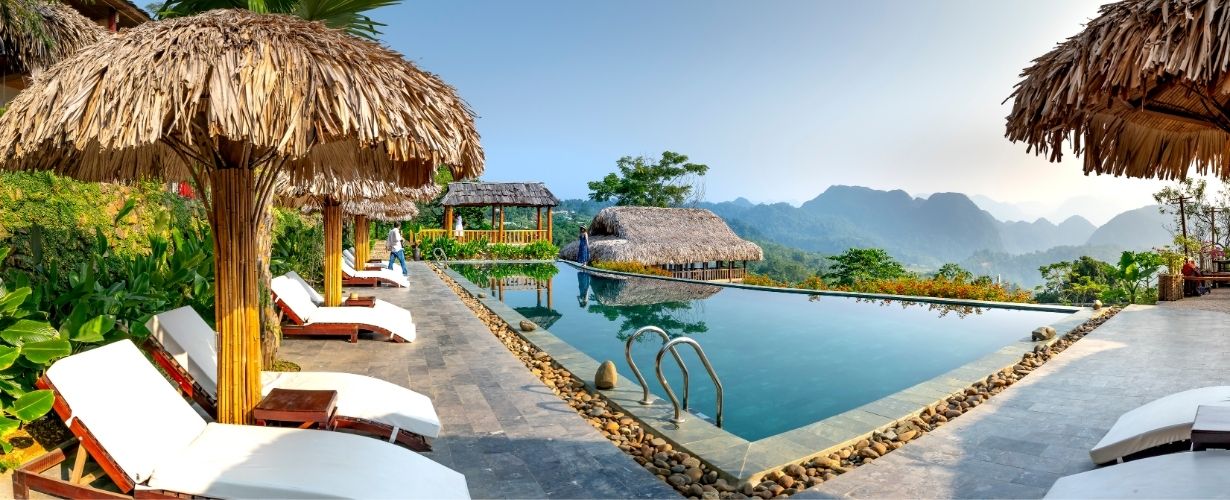
Most DIY pool landscaping goes off track when people plant things they like without thinking about how they grow, interact, or fit together.
Start with the big picture: what do you want this space to feel like? Privacy? Shade? A tropical getaway? A calm zen garden? Or something low-maintenance? Your main goal should guide every decision. Keep in mind that needs change depending on your household—young families, empty nesters, remote workers, or weekend swimmers all have different priorities.
Pay attention to sun and shade throughout the year. Where does the morning sun hit? Where is the harsh afternoon sun? How do shadows shift in winter and summer? This will guide where your plants go more than anything else. Get it wrong, and you’ll keep replacing plants while wondering why nothing thrives.
Think about how plants grow, not just how they look now. That tiny bamboo in a small pot could become a 20-foot screen in a few years. A small croton can spread and take over its space. Plan for mature sizes to avoid overcrowding and constant replanting.
Layer your plants for depth and visual interest. Place tall plants like palms or bamboo at the back, medium shrubs like crotons in the middle, and low ground covers or grasses at the front. This creates a professional, layered look where your eye naturally moves through the space.
Don’t forget room for hardscaping and movement. Plants are just one part of the design. You need paths, seating, easy maintenance access, space for furniture, and room to enjoy the pool without pushing through dense planting.
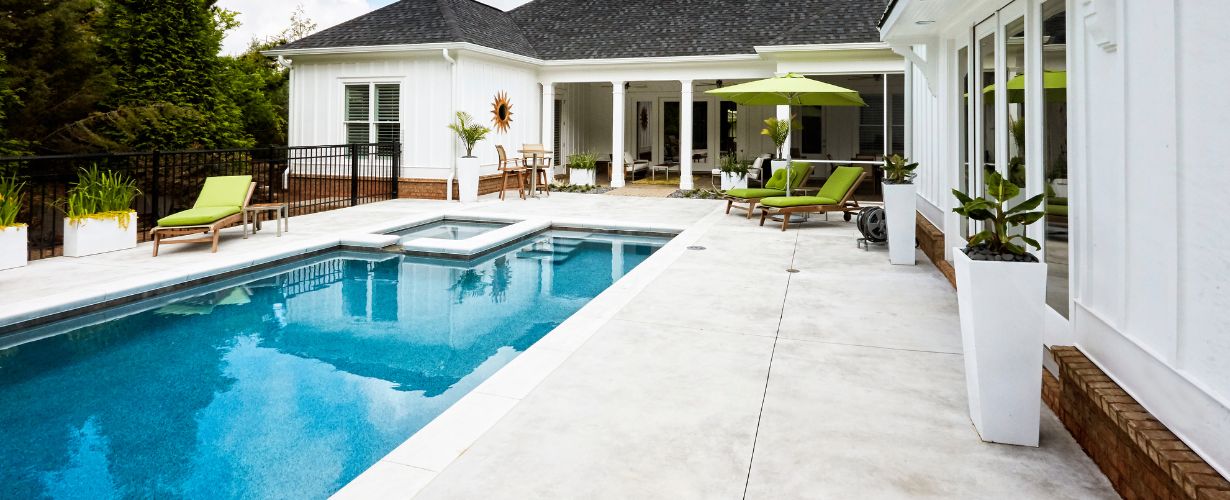
Let’s talk numbers—plain and simple.
For a typical West Palm Beach or Palm Beach home with a standard quarter-acre lot and pool, a professionally designed and installed pool landscape usually costs $15,000 to $35,000. The final price depends on plant choices, hardscape features, lighting, and irrigation.
Here’s a rough breakdown:
On larger estate properties in West Palm Beach, costs can roughly double due to more land, bigger plants, and more advanced systems.
But here’s the upside: a well-designed pool area can add $20,000–40,000 to your home’s value, according to local real estate data. These spaces not only look amazing in listing photos but also create strong emotional appeal for buyers. They show that a property has been cared for thoughtfully, not just maintained minimally.
Even more importantly, a great pool landscape improves everyday life. You get better usability, more privacy, increased comfort, and a more beautiful space to enjoy. These benefits might not appear on an appraisal, but they’re very real in how you experience your home day to day.
After fifteen years of building pools across South Florida, we’ve learned something important: constructing the pool itself is the simple part. The real challenge is designing spaces where families actually want to spend time—where the pool isn’t just another feature to maintain, but a place that brings people together.
That’s why we plan landscaping from the very beginning. We don’t just build pools and occasionally think about plants—we create complete environments, and water features are just our specialty.
When working on homes in West Palm Beach, Palm Beach, and Boca Raton, we take everything into account: preserving mature trees, working with natural drainage, ensuring privacy and sight lines, tracking the afternoon sun across your lot, and designing microclimates that make your backyard more comfortable than your neighbors’.
The sound of flowing water isn’t just calming—it becomes the heartbeat of a home designed for peace. But achieving that feeling takes thoughtful design that goes far beyond the pool itself.
The difference between a pool and a true backyard sanctuary is in the details most contractors overlook. It’s knowing that Florida isn’t California, that our climate requires specific solutions, and that cutting corners now often costs more later than investing in the right design from the start.
Your backyard can become the place your family loves to gather, the spot your friends request for parties, the space that makes every day feel like a vacation—without ever leaving home.
This isn’t luck—it’s design. And it begins with the understanding that landscaping isn’t just decoration—it’s the heart of the entire experience.
About the Author:
Henry Pierce is co-owner of aquaelitepool.com, and he brings 15+ years in luxury construction expertise to Aqua Elite Pool, combining engineering precision with designs that transform ordinary spaces into environments where families naturally gather and memories happen. When he’s not building pools, he spends time with his family, reading good books or playing tennis.