
It’s a Saturday morning. Not at a bank. Not in a finance office. Just two neighbors standing at the property line between their yards, coffee in hand, trying to keep warm against the February chill that Floridians call winter.
This scene plays out every weekend across Boca Raton, Parkland, Fort Lauderdale, West Palm Beach, and Jupiter. One homeowner finally says what’s been on their mind for months: “We’re thinking it’s time to build the pool.”
The other neighbor nods. Then comes the pause—the real question hiding behind the words.
“It’s just—the money part.”
Because here’s the truth no one talks about at neighborhood barbecues or during school pickups: even families who can afford it often struggle with whether to actually spend it. Dropping seventy-five or eighty-five thousand dollars at once feels huge, no matter how healthy your bank account looks.
What surprises many homeowners in Boca Raton, Parkland, Fort Lauderdale, West Palm Beach, and Jupiter is that those neighbors with the show-stopping backyard setups—the tanning ledge, fire bowls, and outdoor kitchens that draw every gathering to their yard—often financed the project.
Not because they had to.
Because it made sense financially.
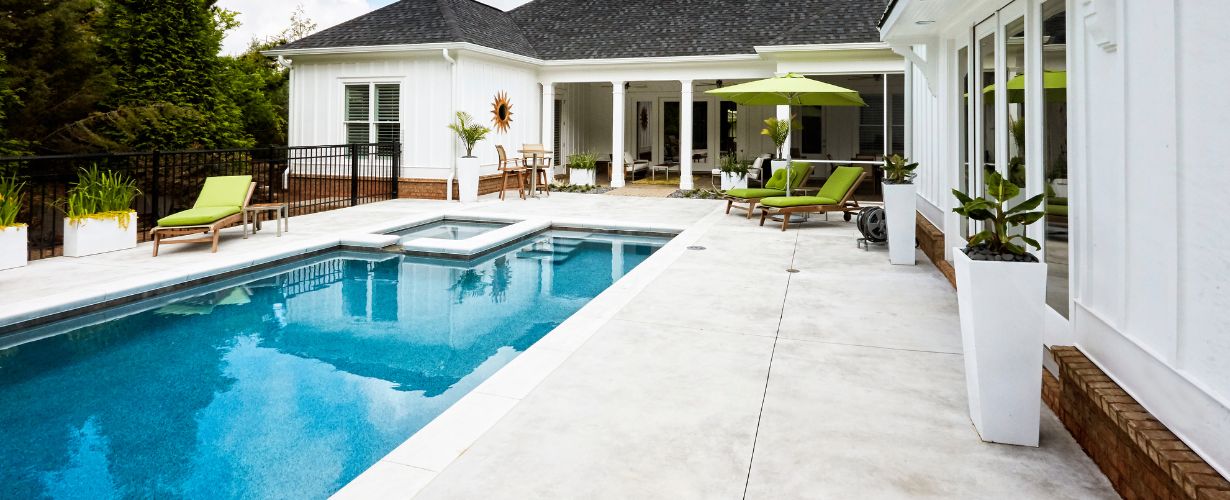
There’s an unusual quietness around pool financing in the luxury market. Visit most high-end pool builders’ websites, and financing is barely mentioned—almost as if it’s something to hide, a backup plan for those who can’t pay cash for a pool.
That’s the wrong way to think about it.
Data shows that households earning over $200,000 a year often use financing for major home projects—not because they have to, but because it’s smart money management. These aren’t people stretching beyond their means. They understand that keeping cash on hand has value, that every dollar has an opportunity cost, and that being able to enjoy a pool this summer instead of waiting three years is worth something.
Luxury pool projects in Boca Raton, Parkland, Fort Lauderdale, West Palm Beach, and Jupiter typically cost between $75,000 and $150,000. That’s not the kind of money most people have sitting in a checking account, even high-earning professionals. It’s usually invested in retirement accounts, college funds, or other long-term plans, earning returns along the way.
Using all that money at once to pay for a pool isn’t just uncomfortable—it’s often the least efficient way to manage your finances.
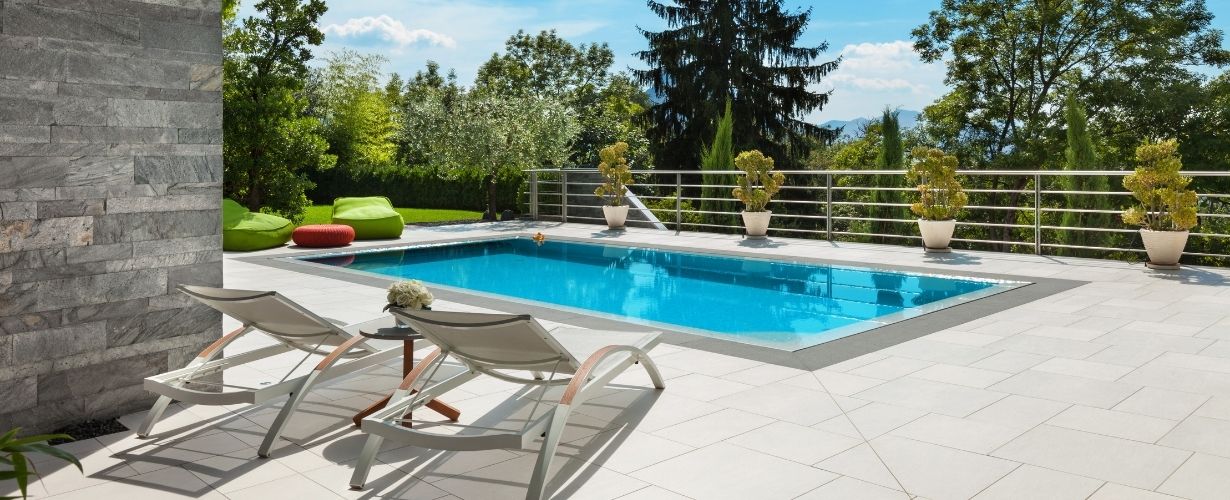
Financing a pool in Boca Raton, Parkland, Fort Lauderdale, West Palm Beach, or Jupiter isn’t one-size-fits-all. There are several options, each with its own pros, cons, and situations where it works best.
Home equity loans are the traditional choice. You’re borrowing against the value you’ve already built in your home, usually at lower interest rates than unsecured loans. In areas like Boca Raton and West Palm Beach, rising property values mean your home equity can be a powerful financial resource. The setup is simple: fixed interest rate, fixed monthly payment, and a set term. You know exactly how much you’ll pay and when it will be finished, which can be reassuring for families who like predictability.
But there are things to consider: closing costs, processing time, and the added pressure of increasing your mortgage debt. For some homeowners, these factors outweigh the benefit of a low interest rate.
Home equity lines of credit (HELOCs) offer more flexibility. Instead of a lump sum, you get a credit line to draw from as needed. This works well for pool projects because construction often happens in stages—you only pay interest on what you borrow. For example, you might take $40,000 for the first phase, then access more funds later without needing a new approval. HELOCs can be especially helpful if you’re juggling multiple financial priorities at once.
Personal loans work differently. No home equity, no appraisal, no closing costs. Approval can happen in just a few days, and funds may arrive within 48 hours. The trade-off is usually a higher interest rate than secured loans, but the speed can be worth it if you need to move quickly—say, to get a seasonal discount or finish a project before a big event.
Pool-specific financing through builders or manufacturers falls somewhere in between. These loans are designed for the pool industry, so lenders understand the product, timeline, and value better than general lenders. Some come with promotional offers, like zero-percent financing for 12–18 months or deferred interest programs. These can be great if you pay off the balance on time, but they can become costly if you don’t.

Let’s look at a real example—numbers make financial decisions much easier to understand.
Suppose you’re planning an $85,000 pool project in Windermere. You have the money in investments earning about 7% per year, and you’re deciding whether to cash out your investments or take a loan.
A home equity loan at 6.5% over ten years would cost roughly $965 per month. The total interest paid over the life of the loan would be around $30,800. That might seem high at first, but here’s the comparison: if your investments keep earning 7% while you pay 6.5% on the loan, your money actually works harder staying invested than it would if spent on the pool upfront.
The effect is even more noticeable with shorter loans. A five-year $85,000 loan at 6.5% would require about $1,665 per month, but the total interest drops to roughly $14,900. You pay it off faster, and the cost of taking money out of investments is lower.
Of course, this depends on your personal situation. If paying cash would drain your emergency fund, keeping liquidity might be more important than saving on interest. If you’re in your peak earning years and confident about your income, a faster payoff plan might make more sense than stretching the loan.
Interest rates also change over time. Many homeowners who locked in low rates in the past now have borrowing costs below their investment returns. In cases like that, carrying a low-interest loan can actually improve your financial position.

Here’s something financing companies don’t make obvious: your credit score doesn’t just affect whether you get approved—it also affects how much you’ll pay.
Even a small difference in credit can add up to thousands of dollars over the life of a pool loan. For example, someone with a 780 credit score might get a 5.9% rate, while a 680 score could mean 8.5%. On an $85,000 loan over seven years, that difference is about $200 more per month and roughly $17,000 extra in interest.
Knowing this ahead of time can make a big difference. If your score is just below a key rate threshold, waiting a few months to improve it can save far more than rushing into a loan.
Improving your credit isn’t complicated. Keep credit card balances under 30% of your limit, avoid opening new accounts before applying, and fix any errors on your credit report. These steps won’t turn a 620 score into 800, but they can move a 710 up to 740—and that difference has real financial impact.
For families planning a pool a year in advance, this gives you time to boost your credit strategically. When the time comes to apply, you’ll be in the best position to get the lowest rates and save the most money.
The costliest financing mistake isn’t picking the wrong loan—it’s making the choice in isolation, without seeing how all your options really compare when applied to your own numbers.
This is why talking with a financial professional who understands luxury home improvements is so valuable. Not a pool salesperson who treats financing as an afterthought. Not a generic loan officer who just processes your application. You need someone who can look at your full financial picture and show exactly what different strategies will cost you.
These conversations often uncover solutions you wouldn’t see on your own. Maybe paying half in cash and financing the rest is best for taxes. Maybe a shorter loan with higher payments actually frees up more of your budget later when your oldest goes to college. Maybe your home equity is better used elsewhere, and a personal loan—despite a higher rate—puts you in a stronger overall position.
The families who finance their pools most successfully treat it as a strategy, not just a transaction. They compare real offers, not just advertised rates. They understand prepayment penalties and whether they’ll need flexibility. They know the difference between APR and interest rate—and why that difference matters.

Think about how savvy homeowners handle big investments. They’re not asking, “Can we afford this?” They’re asking, “What’s the smartest way to manage it?”
Some homeowners use a home equity line to fund a project in stages, paying interest only on the money they’ve actually used, while keeping the rest of their savings invested. They’re not paying interest on the full cost while the pool is still being dug.
Others compare what their money earns in investments to the cost of borrowing. If their portfolio averages 9% and financing costs 6%, borrowing makes financial sense—and that advantage grows over time.
Some families keep their emergency fund intact by financing the pool instead of draining savings. This preserves flexibility, giving them security and the ability to respond to unexpected opportunities or challenges.
These aren’t just ideas—they reflect how financially smart homeowners actually approach major home improvements. The real question isn’t “Should we take on debt?” It’s “How can we deploy our money to get the best outcome across all our financial goals?”
Before deciding on a financing option for your pool project in Boca Raton, Parkland, Fort Lauderdale, West Palm Beach, or Jupiter, consider these key questions:
How fast do you need the funds? Home equity loans usually take 3–4 weeks to approve and fund, while personal loans can be ready in just a few days. If your schedule is tight, this may limit your choices.

What the financing process looks like when you move forward:
Week 1 – Consultation & Application: You gather documents like pay stubs, tax returns, and bank statements, then submit your application. Most lenders handle this online now, which speeds things up.
Weeks 2–3 – Underwriting & Appraisal: For home equity loans, the lender orders an appraisal to check your home’s value. Your credit and income are reviewed to make sure you can take on the new loan.
Weeks 3–4 – Approval & Closing: You get final approval, review your loan papers, and close the loan. Funds are released, and construction can begin.
This timeline is for typical situations. Some things can cause delays, like a lower-than-expected appraisal or longer employment verification.
Plan ahead: If you want construction to start in March, submit applications in January. If you need the project finished before a big June event, start talking about financing by March at the latest.
Working with a pool builder who understands financing can completely change your experience.
At Epic Watershapes™, we’ve built strong partnerships with lenders who focus on luxury home projects. They get the value of high-end pool construction and know how a completed pool can enhance a property’s appraisal. Financing a full outdoor living upgrade in Boca Raton, Parkland, Fort Lauderdale, West Palm Beach, or Jupiter isn’t the same as financing a jet ski or a small above-ground pool — and these lenders understand that difference.
Their expertise means better loan terms, quicker approvals, and a smoother process than you’d typically get with a general lender.
Even more important, we help you understand your options before you commit. We’ve guided hundreds of families through this process, know which financing products work best in different situations, and can connect you with financial professionals who provide objective, personalized advice.
After years in this market, we’ve learned that the happiest pool owners aren’t necessarily the ones who paid cash or financed. They’re the ones who made informed decisions that fit their overall financial plan.

There’s a moment in many financing discussions when a homeowner’s understanding clicks.
It’s when they see that keeping $85,000 invested while financing their pool at 6% isn’t “going into debt”—it’s smart money management. Their investments keep growing at historical market rates, while borrowing costs remain relatively low.
Or when they realize that their monthly pool payment could be less than what they’re already spending on weekend outings—because their home hasn’t been a place they really enjoy.
Or when they understand that paying for half the project in cash and financing the other half keeps money available for opportunities that may come up six months down the line—opportunities they would miss if all their savings were tied up in concrete and tile.
This isn’t about taking on debt for the sake of it. It’s about understanding how money works when you think strategically instead of emotionally.
The wealthy don’t avoid debt—they avoid costly or poorly structured debt. They only take on debt that serves a purpose. Debt that costs less than the opportunity it protects, that keeps them flexible, that lets them enjoy their investment while their kids are still young?
That’s debt that makes sense.
If you’re reading this, you’re likely serious about a pool project in Boca Raton, Parkland, Fort Lauderdale, West Palm Beach, or Jupiter. The real question isn’t whether you can afford it—chances are, you probably can. The question is how to set up financing in a way that works for your situation.
That process doesn’t start with an application—it starts with understanding your options.
Reach out to Epic Watershapes™ for a free financing consultation. We’ll go over your project, discuss your financial priorities, and connect you with lenders who can provide real quotes based on real numbers. No pressure, no obligation—just a clear picture of what’s possible.
Your dream backyard doesn’t need to wait for “someday” when it can make sense today.
About the Author:
Henry Pierce is co-owner of aquaelitepool.com, and he brings 15+ years in luxury construction expertise to Aqua Elite Pool, combining engineering precision with designs that transform ordinary spaces into environments where families naturally gather and memories happen. When he’s not building pools, he spends time with his family, reading good books or playing tennis.