
This question comes up in almost every first design meeting, usually right after the homeowner pulls out their phone and starts scrolling through a long list of Instagram photos.
“We really like this infinity edge style,” they say, showing pictures of pools that look like they flow straight into the view. “But is it actually worth the investment?”
It’s a good question—and it’s not something that can be answered with a quick yes or no.
Most pool companies focus on how a pool looks, but the real choice between an infinity pool and a traditional pool isn’t about appearance. It’s about how you plan to use the pool every day.
I’ve seen families get excited about the stunning look of an infinity edge, only to realize months later that they actually needed a shallow space where their kids could safely play. I’ve also seen homeowners pick a traditional pool to cut costs, then spend years wishing they had taken advantage of the beautiful lake or ocean view behind their home.
The truth is, the difference between these two pool styles goes far beyond how the edge looks.
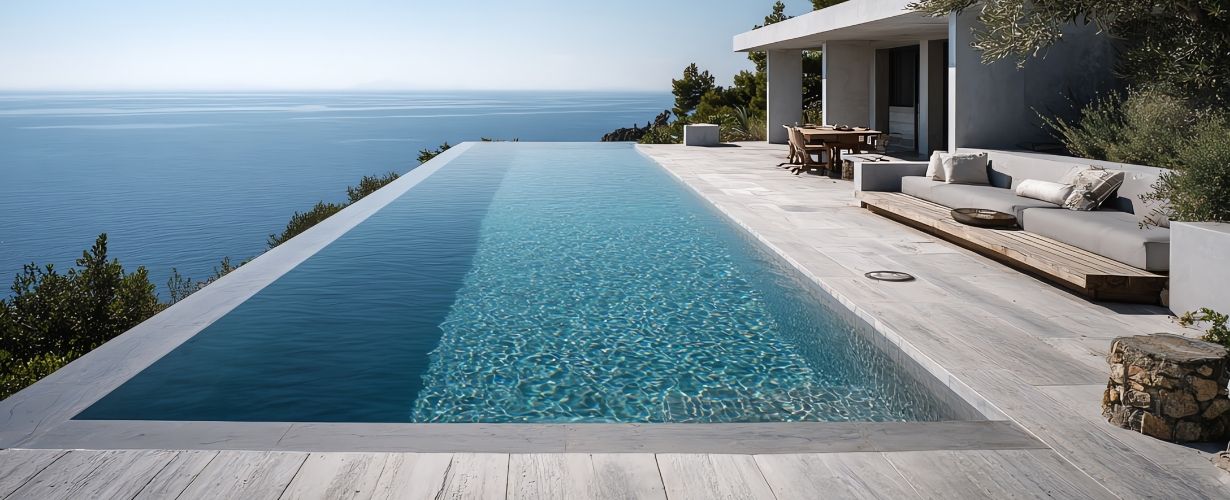
An infinity pool—sometimes called a vanishing edge or negative edge pool—creates the optical illusion that water extends endlessly into the landscape beyond. One or more edges of the pool appear to have no boundary, with water cascading over the edge into a catch basin hidden from view.
The effect can be breathtaking when properly executed. Water appears to merge with a lake, the Gulf horizon, or even a carefully manicured lawn.
But that visual magic requires serious engineering. The catch basin must be sized correctly to handle displaced water when swimmers enter the pool. The return system needs additional capacity to pump water back up from the lower basin. The infinity edge itself demands precise leveling—we’re talking tolerances measured in millimeters, not inches.
Traditional pools, by contrast, use raised coping around the entire perimeter. Water level sits several inches below the deck, contained within clearly defined boundaries. Skimmers pull surface debris into the filtration system. The approach is time-tested, straightforward, and forgiving of minor installation variances.
Neither approach is inherently superior. They’re simply different tools for different situations.
Florida’s landscape has a big impact on whether an infinity pool will work well.
Properties with natural slopes are ideal for vanishing edges. If your backyard drops toward a lake, nature preserve, or open view, an infinity edge can make the pool blend seamlessly with the scenery, enhancing the view.
Flat lots are trickier. Without a natural drop or focal point for the water to “vanish” into, the infinity effect can feel weak. Some homeowners try to create it using artificial berms or raised decks, but this often looks forced rather than natural.
In West Palm Beach and surrounding areas like Palm Beach, Boca Raton, and Wellington, many lots are fairly flat. While this doesn’t rule out infinity pools, it does mean the design needs extra thought to make it feel right.
The most successful infinity pools in South Florida make the most of water views—even small ones. A pool that seems to flow into a pond or preserve can create a striking visual effect without needing steep slopes.
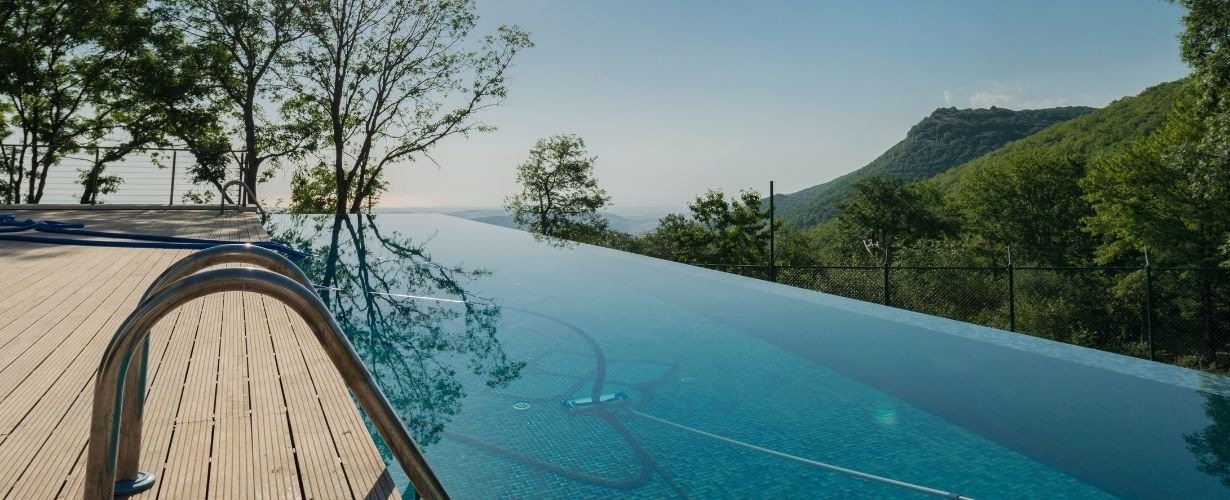
Let’s be honest: infinity pools are much more expensive than traditional pools.
For a typical residential installation, you’re looking at an extra $15,000 to $40,000, depending on the length of the infinity edge and any challenges specific to your property. And that doesn’t include extra landscaping or structural work needed to make the view perfect or create the right elevation.
Why the big price jump?
The catch basin alone is essentially a second, smaller pool that needs to be dug, formed, plumbed, and finished. You’ll also need a separate pump to move water back to the main pool. On top of that, the infinity edge must be built with extreme precision—any small leveling mistakes are instantly noticeable when water flows over the edge.
Traditional pools are simpler and cheaper because the construction methods are standardized and refined over decades. The perimeter is uniform, skimmers handle circulation, and there’s less need for custom work or specialized labor.
For families on a set budget, that price difference often decides the choice. The question becomes less about “which looks better” and more about “is the dramatic effect worth $25,000 that could go toward an outdoor kitchen, fire feature, or upgraded finishes?”
There’s no wrong answer—just an honest look at what matters most for your family.
Infinity pools need more regular care than many homeowners expect. The catch basin collects leaves, debris, and sediment that flow over the edge, so it requires frequent cleaning. During Florida’s heavy summer rains, the basin can overflow if it’s too small or if drains get blocked. The extra pump also adds another mechanical system that needs periodic servicing and eventual replacement.
Water chemistry is slightly trickier because the catch basin and main pool are essentially two connected bodies of water. Chemicals take longer to distribute, and testing should consider both areas.
In contrast, traditional pools are simpler to maintain. Skimmers catch most surface debris before it sinks, a single pump handles all circulation, and the closed perimeter reduces water loss from splashing and overflow.
The difference in maintenance isn’t huge, but it is noticeable. Homeowners who want lower upkeep often find that traditional pools fit their lifestyle better.
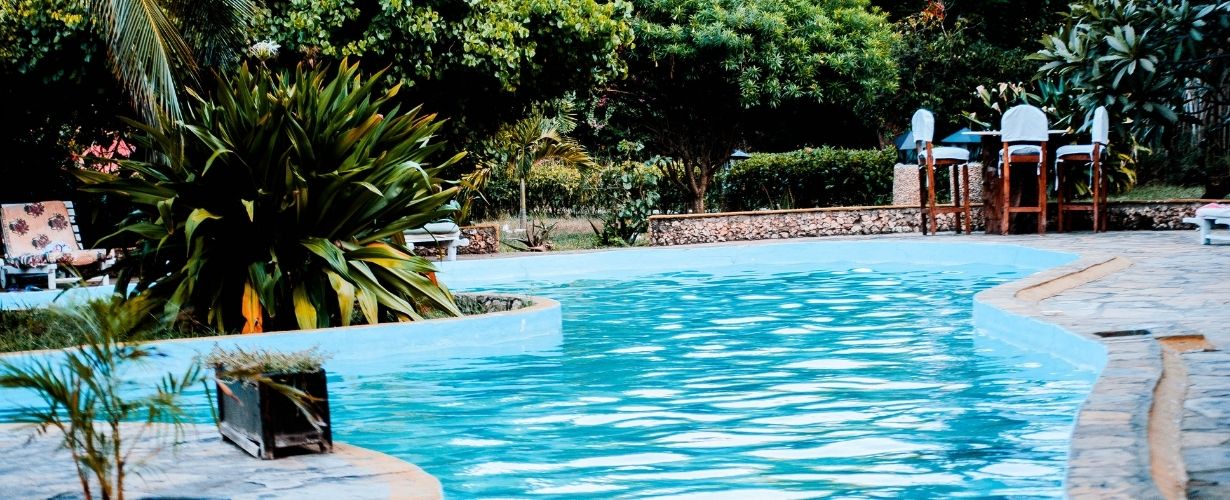
Do Infinity Pools Add More Value to a Home Than Traditional Pools?
The answer isn’t straightforward—it depends on the property and location.
In areas where waterfront or golf course views are highly valued, an infinity pool can boost a home’s appeal. A well-designed vanishing edge that takes advantage of lake or conservation views can enhance the property’s natural advantages.
In typical neighborhoods without special views, an infinity edge may not increase value much more than a standard pool. Buyers often focus on the pool’s size, condition, and how it fits with the rest of the property—not just the edge style.
In West Palm Beach and South Florida, custom pool features generally add between $80,000 and $150,000 in appraised value. This applies to high-quality pool designs overall, not only infinity-edge pools.
The biggest value comes from standing out. In neighborhoods where most homes have standard pools, an infinity pool can make a property more noticeable, potentially selling faster or at a higher price.
However, just being different isn’t enough. The pool must be well-built, match the home’s style, and appeal to buyers in the local market.
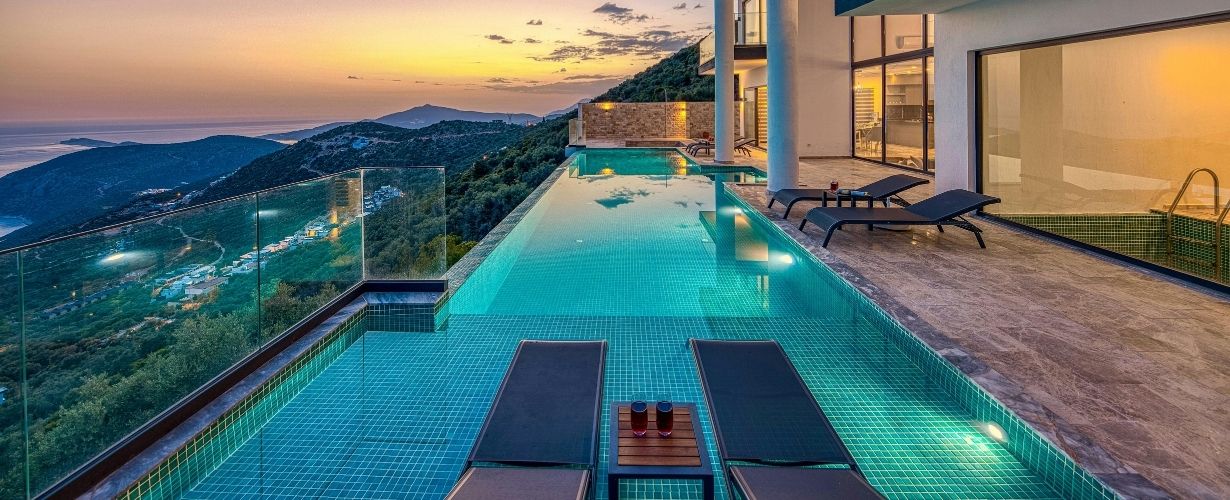
Infinity pools work especially well in certain situations.
Properties with western or southern exposure shine with infinity edges that face the sunset. The effect of water blending into the warm light of golden hour creates a stunning, unforgettable atmosphere that traditional pools can’t match.
Smaller yards can benefit too. By removing the visual barrier of a raised edge on one side, an infinity pool can make the space feel larger than it really is.
Homes with clean, minimalist designs are a natural fit. Contemporary houses with large glass walls often feature infinity pools that feel like an extension of the indoor living space.
And of course, the best results come from homes with real views—whether it’s a lake, the ocean, or a nature preserve. In these settings, a vanishing edge pool delivers maximum visual impact with minimal effort.
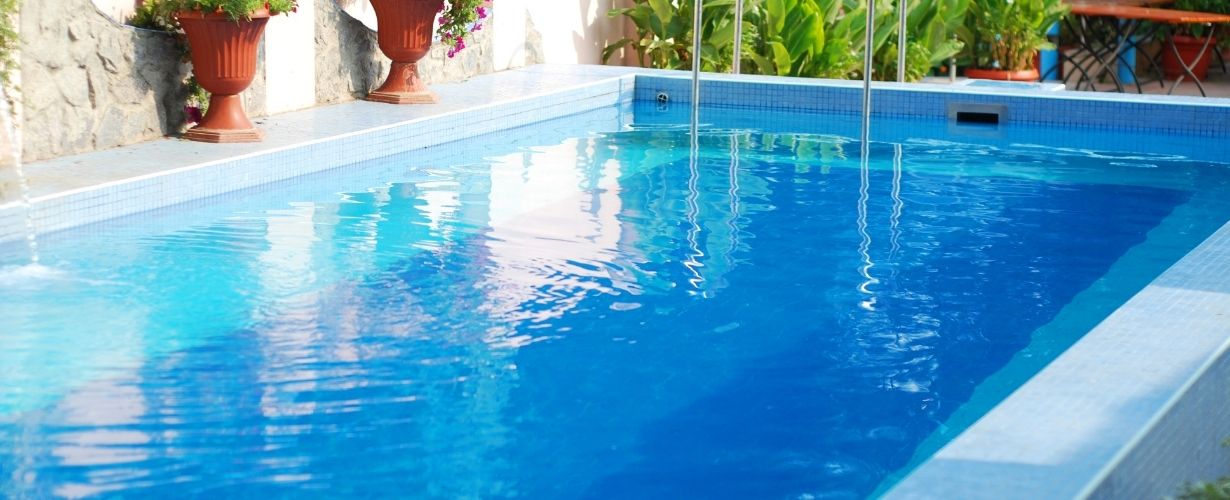
Traditional pool designs work best in certain situations.
Families with young kids often like raised edges because they clearly define the pool area. The physical barrier makes it easier to supervise swimmers, and the slightly lower water level adds an extra layer of safety.
Homes with active outdoor entertainment areas also benefit from traditional pools. They reduce water splashing onto decks, whereas infinity edges can create wet zones that interfere with nearby seating or dining spaces.
For homeowners who want low-maintenance options, traditional pools are easier to manage. Their simpler systems—like a single pump and standard skimmers—don’t require specialized knowledge for routine care.
Finally, many homes simply don’t have the views or elevation needed for an infinity edge. A well-designed traditional pool with quality finishes, smart landscaping, and integrated features often makes a stronger impact than trying to force an infinity edge where it doesn’t naturally fit.
Not every pool has to be an all-or-nothing choice between a full infinity edge and a standard pool edge.
Partial infinity designs—where only one side of the pool has a vanishing edge while the rest stays traditional—offer a balanced option. This gives you the dramatic look of an infinity pool without the higher cost and complexity of having multiple edges.
This approach works especially well when your property has a standout view. The infinity edge can face that view, while the other sides use regular construction.
Many homeowners only consider this hybrid option after seeing quotes for a full infinity pool. It can cut costs significantly—often 40–50% less—while still keeping the main visual effect they wanted.
It’s a good idea to bring up partial infinity edges during early design discussions, especially if you’re trying to balance budget and style.
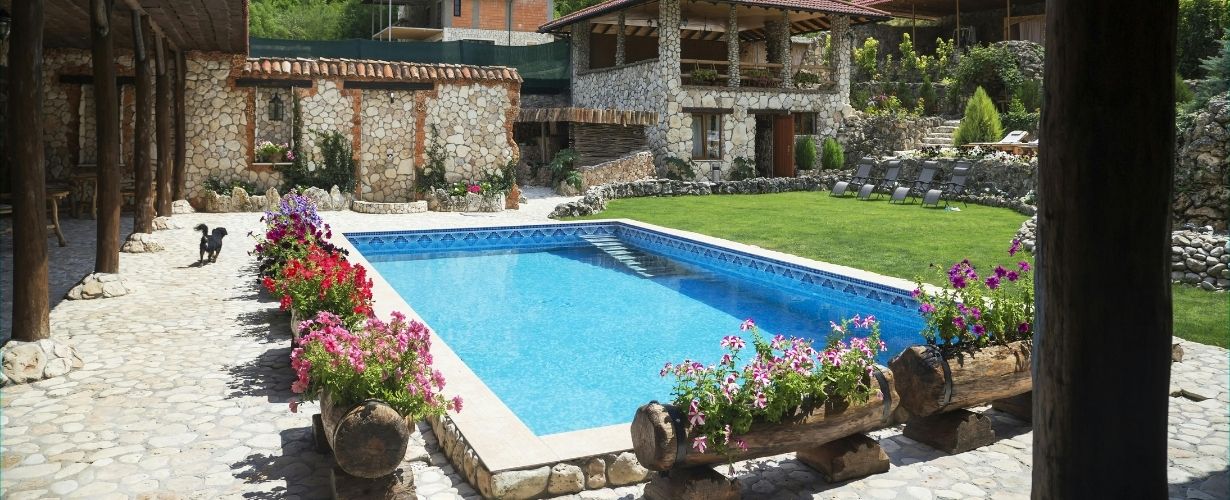
Choosing the right pool style comes down to a careful look at several factors.
Start by examining your property. Walk through your backyard and notice natural highlights—views you want to show off, slopes or elevation changes, or areas that could feel bigger with the right design. If it’s hard to find a spot that would make a great infinity edge, that’s a clue.
Think about how your family actually uses outdoor space. Do you picture quiet mornings with coffee, enjoying water flowing toward the horizon? Or lively weekends with kids splashing and adults relaxing on the deck? How you use the space will influence which design fits best.
Be honest about maintenance. If you enjoy caring for your pool and don’t mind extra effort, an infinity pool could be perfect. But if you prefer something simple and low-maintenance, a traditional pool may be a better match.
Finally, consider your budget. Infinity pools cost more because they are more complex to build and maintain. If that extra cost means you have to compromise on pool size, finishes, or other backyard features, you might end up with a stunning edge but lose overall functionality.
After hundreds of pool consultations, I’ve learned that the type of pool edge usually isn’t what makes families fall in love with their outdoor space.
What really matters is how the whole design fits your lifestyle:
Infinity pools can be stunning when they suit your property and lifestyle. Traditional pools can be just as impressive when designed thoughtfully.
The best pool is the one that makes your outdoor space feel like home—where summer evenings are easy, kids make lasting memories, and stepping outside instantly melts away stress.
That’s the conversation worth having. It starts with understanding not just how different pool styles look, but how they actually work in your South Florida home.
About the Author:
Henry Pierce is co-owner of aquaelitepool.com, and he brings 15+ years in luxury construction expertise to Aqua Elite Pool, combining engineering precision with designs that transform ordinary spaces into environments where families naturally gather and memories happen. When he’s not building pools, he spends time with his family, reading good books or playing tennis.