
Algae is one of the most common problems pool owners deal with. One day the water looks fine. A few days later it is green, cloudy, or has patches growing on the walls and floor. It can happen faster than most people expect, especially in warm weather. Florida pools are particularly prone to it because the combination of heat, sunlight, and humidity creates exactly the conditions algae needs to grow quickly. What starts as a slightly off-colour pool on a Monday can be a fully green swamp by the weekend if nothing is done about it.
The good news is that algae is treatable in most cases. It does take some effort and the right approach, but most pools can be cleared up within a few days if you follow the correct steps in the right order. This guide walks through why algae grows, how to identify which type you are dealing with, and exactly what to do to get rid of it and stop it from coming back.
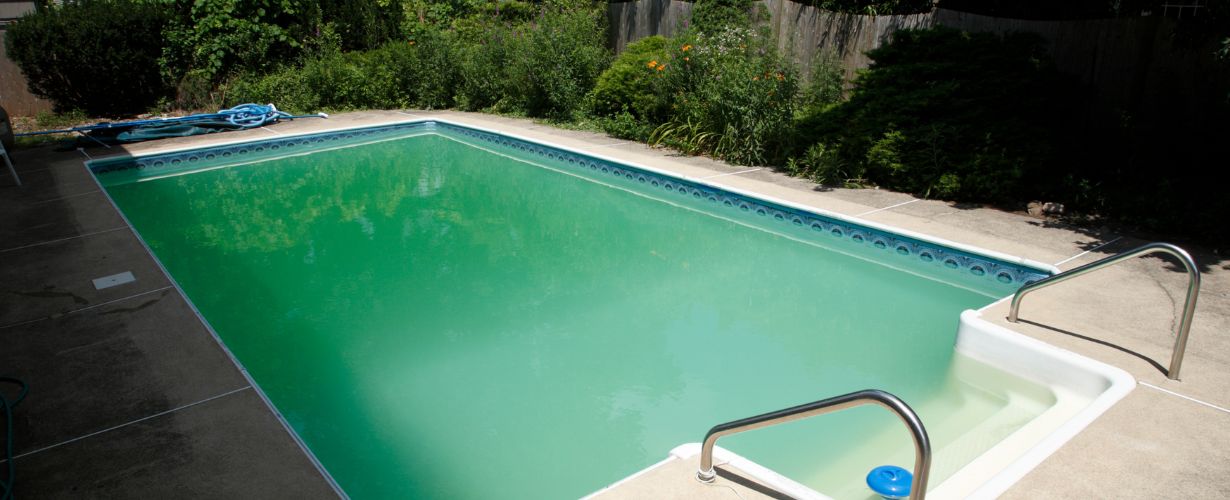
Algae spores are in the air and the environment all the time. They get into pools through wind, rain, debris, and even swimwear. The spores themselves are not the problem. The problem is when the conditions in the water allow them to grow.
Algae grows when:
Hot weather speeds things up. A pool that is fine on Friday can have a visible algae problem by Sunday if conditions are right. Summer is when most algae problems happen for this reason.
Not all algae looks the same. Knowing what type you are dealing with helps you treat it properly.
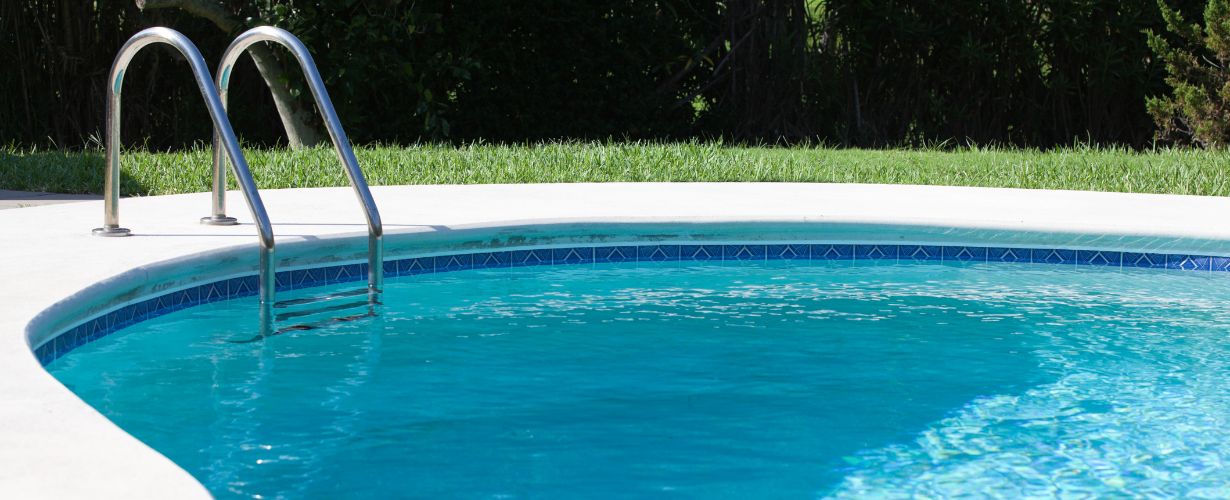
Before you add anything to the pool, test the water. This tells you what you are working with.
You need to know:
pH is especially important. Chlorine works much less effectively when pH is too high. A lot of algae problems are made worse by the fact that the chlorine in the pool is not doing its job because the pH is off. Fix the pH first before you start adding extra chlorine.
Before you shock the water, brush the entire pool. Walls, floor, steps, corners, behind ladders, around fittings. Everything. Brushing breaks up the algae and exposes it to the water so the chlorine can actually reach it. This matters especially for yellow and black algae which have protective layers. Skipping this step makes the treatment much less effective.
Use a stiff brush for plaster or concrete pools. Use a softer nylon brush for vinyl or fibreglass to avoid scratching the surface.
Shocking means adding a large dose of chlorine to kill the algae. How much you need depends on the type and severity.
After shocking, keep the pump and filter running continuously for at least 24 hours, ideally longer. The filter is what physically removes the dead algae from the water. Without it running, the dead algae stays suspended and the pool stays cloudy.
Clean or backwash the filter during this period. As it captures algae it can get clogged and slow down. If you have a sand filter, adding a small amount of diatomaceous earth can help it catch finer particles.
Once the algae starts dying off it will settle on the floor of the pool. Vacuum it out.
For heavy algae, vacuum to waste rather than through the filter if your system allows it. This means the dirty water goes straight out rather than back through the filter, which reduces the load on the filter and speeds up the clearing process. You will lose some water doing this so be prepared to top the pool up afterwards.
After treatment, test the water again. Shocking raises the chlorine level significantly and the pH can shift as well. Give it 24 to 48 hours and then test to see where things have settled. You may need to adjust pH, add stabiliser, or balance the alkalinity once the chlorine has come back down to a normal range.
The pool may stay cloudy for a day or two even after the algae is dead. That is normal. Keep the filter running and it will clear up.
If you are treating the pool but algae keeps returning, there is usually an underlying cause.
Common reasons algae comes back include:
Rough or deteriorating pool surfaces are also worth looking at. Algae gets into small cracks and pits in plaster and becomes much harder to brush out. Whether the right fix is resurfacing or replastering depends on the condition of the existing surface. Poor circulation and ageing equipment are also common culprits and worth checking if the chemical side of things seems fine.
Once the pool is clear, keeping it that way is mostly about consistency.
Algaecide can be used as a weekly preventive treatment. It is not a substitute for proper chlorine levels but it does add another layer of protection, particularly in summer.
Algae happens to most pool owners at some point, even careful ones. It usually just means a few conditions lined up at the wrong time. A hot week, a missed water test, a heavy rainstorm that diluted the chlorine. The key is catching it early. If the water looks slightly off or the walls feel a little slippery when you run your hand along them, that is the first sign. Act at that point rather than waiting for the pool to go fully green. Early algae can often be sorted with a chlorine adjustment and a good brush. A fully green pool takes days of shocking, filter cleaning, and vacuuming to clear. Regular testing, consistent chlorine levels, and a weekly wall brush will stop most algae problems from developing in the first place.
If algae keeps coming back despite doing everything right, something deeper is usually the cause. A deteriorating surface, poor circulation, an undersized pump, or ageing equipment can all make a pool harder to keep clean regardless of how consistent you are with chemicals. If you are in Boca Raton, West Palm Beach, Jupiter, or the surrounding areas and want someone to take a look, the team at Epic Watershapes can help identify whether it is a pool repair or resurfacing issue that is making things harder than they need to be.