How to Fix Swimming Pool Leaks and Save Water
Your backyard swimming pool is the ultimate escape from the intense South Florida heat, providing a place to relax and enjoy time with family and friends across regions like Boca Raton and West Palm Beach. However, that beautiful backyard pool can quickly become an expensive problem when a leak develops out of sight. A leaking pool is one of the most common and expensive problems local property owners face, often starting as a hidden water loss before showing clear warning signs. If your monthly water bill keeps climbing unexpectedly, your pool chemicals keep changing, or you find yourself constantly refilling the pool every few days, you are likely dealing with a real actual leak rather than normal backyard evaporation.
If a pool leak is not fixed in time, it can cause more than just high water bills it can also damage your pool deck and surrounding structure and patio area. In South Florida, sandy soil moves over time because of rain and heat. Water leaking into the ground can weaken the area around your pool, causing the pool and deck to crack or shift. The good news is that many leaks can be found early using simple tests like a 24-hour bucket test or a pool dye test before they become expensive repairs. In this guide, we will walk you through how to find where the leak is coming from, how to fix basic issues, and how to stop wasting water to protect your pool and property.
5 Steps to Find and Fix Pool Leaks
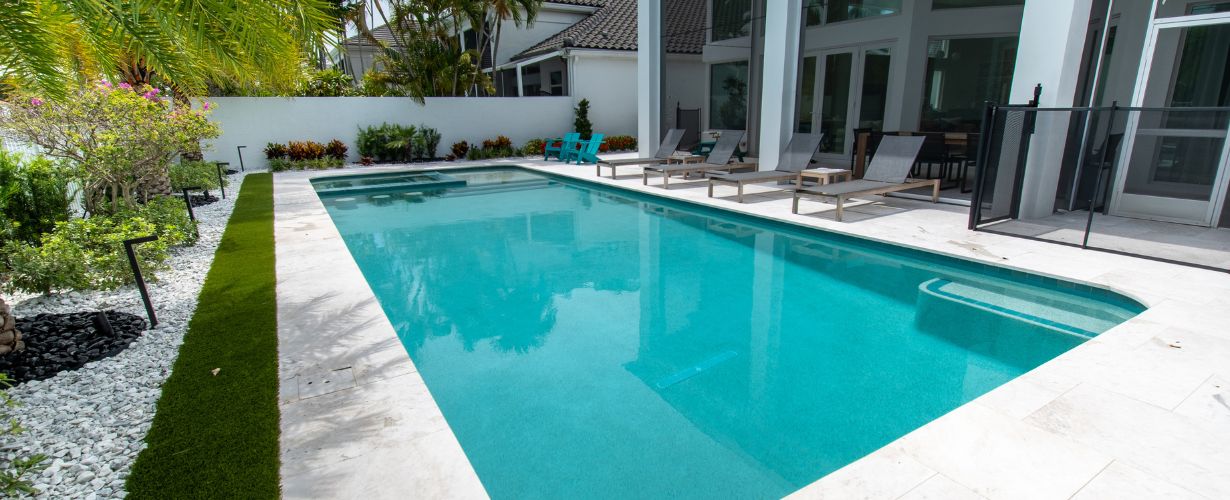
Step 1: Do the Bucket Test
Before calling anyone, try this simple test at home. It takes about 24 hours and costs nothing.
Here’s how to do it:
- Fill a plastic bucket with pool water and place it on the first or second step of your pool.
- Mark the water level inside the bucket with tape or a marker.
- Also mark the pool water level on the pool wall.
- Wait 24 hours. Do not use the pool during this time.
- Check both levels.
What the results mean:
- If the pool loses the same amount as the bucket’s right arrow it’s evaporation, not a leak.
- If the pool loses more than the bucket might arrow you have a leak.
This test is the first thing any pool pro will ask you about. Do it first to save time.
Step 2: Locate the Leak
Pool leaks come from a few main places. Knowing where to look helps you figure out how serious the problem is.
| Location | Warning Signs | How Serious |
|---|---|---|
| Pool shell (cracks) | Wet ground around pool, staining on walls | Medium to High |
| Skimmer | Water drops only when pump is on | Low to Medium |
| Return lines | Wet soil near return jets | Medium |
| Main drain | Hard to see, needs a diver or camera | Medium to High |
| Pump & equipment | Puddles near the pump, fittings, or heater | Low to High |
| Lights | Water loss faster at night, light housing cracked | Low to Medium |
A simple way to narrow it down:
Turn your pool pump off for 24 hours and do another bucket test. If the pool stops losing water when the pump is off, the leak is in the pipes or pool equipment. If it still loses water, the leak is in the shell or pool fittings.
Step 3: Check for Cracks
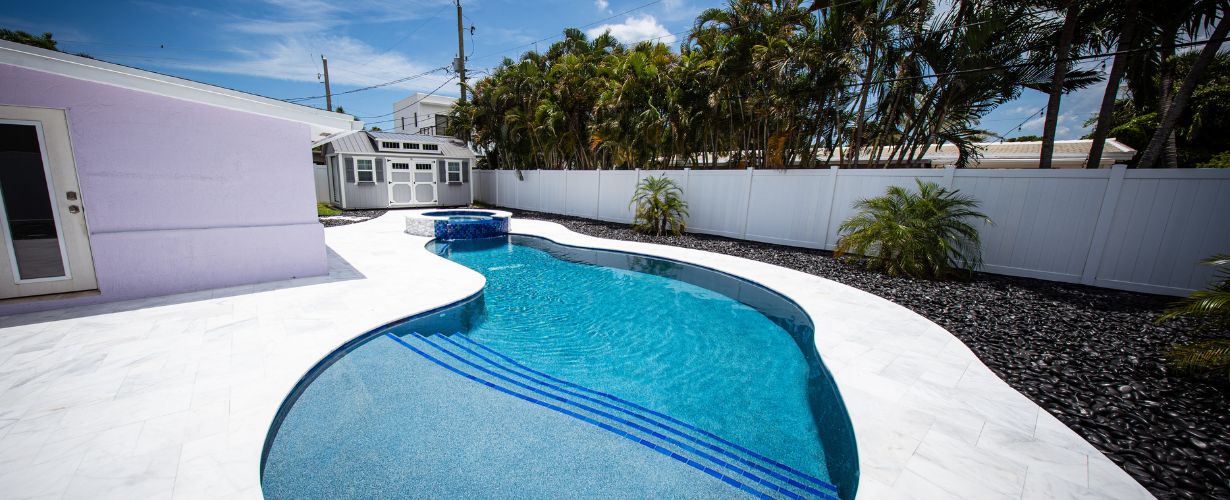
Walk around your pool and look closely at:
- The waterline tiles: Cracks often show here first.
- The pool edge (the edge around the pool): Shifting ground can crack this.
- Around the skimmer: A gap between the skimmer and pool wall is very common.
- Return jets and light fixtures: These fittings wear out over time.
In Florida, the ground shifts slightly over time due to heat and moisture. This puts stress on the pool shell and plumbing, which is why cracks are so common here.
Step 4: Test with Pool Dye
If you find a crack or area you think may be leaking but aren’t sure if it’s leaking, dye testing is the best next step. You can buy pool dye at most pool supply stores.
How to do it:
- Turn the pump off and wait for the water to go still.
- Hold the dye close to the suspected crack or gap just a few inches away.
- Squeeze a small amount of dye near the spot.
- Watch what happens.
If the dye gets pulled into the crack or fitting, you have a leak right there. If it just floats away, that spot is fine. This works great around skimmers, return jets, lights, and visible cracks in the shell.
Step 5: Repair the Leak
Once you know where the leak is, here’s what you can do:
Small Cracks in the Pool Shell: For minor cracks, you can use a pool putty or special waterproof repair cement made for underwater repair. These come in kits at pool supply stores and work while the pool is still full.
Clean the crack with a wire brush.
Press the putty into the crack firmly.
Smooth it out and let it cure.
For bigger cracks or structural damage, you’ll need a professional. Patching a crack without fixing the cause like a shifting shell won’t hold for long.
Skimmer Leaks: Skimmer leaks are one of the most common repairs. The fix is usually a skimmer sealant, which is applied around the inside edges where the skimmer meets the pool wall. This is a low-cost fix and can often be done without draining the pool.
Plumbing and Return Line Leaks: These are harder to find and fix on your own. A leak in a buried pipe usually needs professional leak detection equipment like pressure testing or a camera inspection.
If the leak is at a fitting or joint above ground (near the pump, heater, or filter), you may be able to replace the fitting yourself with basic plumbing tools.
Equipment Leaks: Check all your pump fittings, valves, and connections for drips. Replacing o-rings and gaskets is usually inexpensive and easy. Most pool equipment Leaks start here.
Water Loss From Pool Leaks
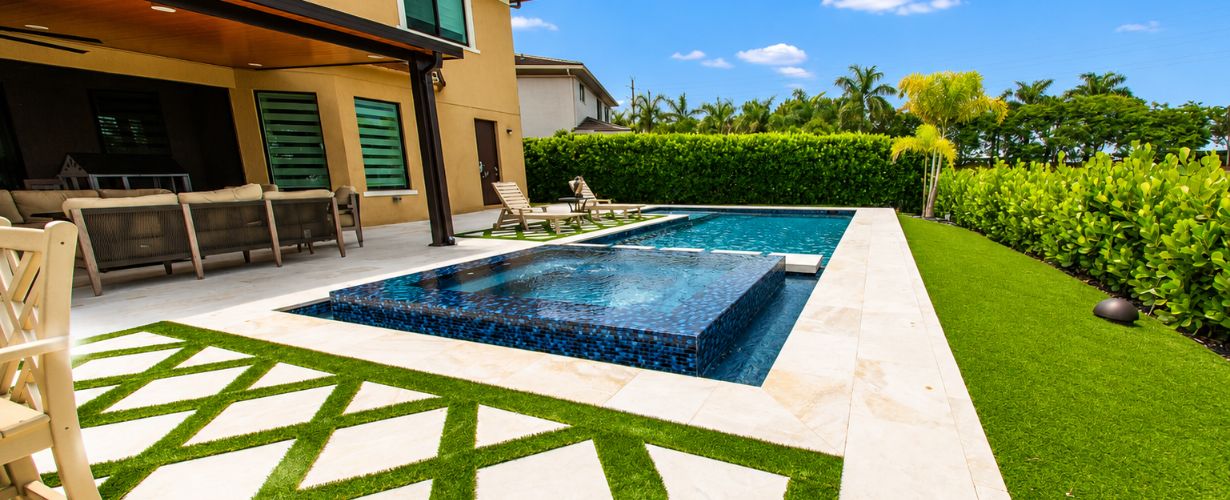
Before we get into the fixes, let’s talk numbers. A pool naturally loses some water to evaporation, especially in hot, sunny Florida. But there’s a big difference between evaporation and an actual leak.
| Water Loss Type | Amount Per Day | Amount Per Month |
|---|---|---|
| Normal evaporation | ¼ inch | 7 inches |
| Small leak | ½ inch | 15 inches |
| Medium leak | 1 inch | 30 inches |
| Serious leak | 2+ inches | 60+ inches |
A typical backyard pool holds about 20,000 gallons of water. Even a small leak can waste thousands of gallons every month, and that means a much higher water bill.
Save Water During Repairs
Fixing a leak takes time. While you’re working on it, here are ways to cut down on water loss:
- Use a pool cover: When your pool isn’t in use, covering it can cut evaporation by up to 95%. It also keeps the water cleaner, which means you spend less on chemicals too.
- Lower the water level slightly: This reduces pressure on any cracks or weak spots in the shell, which slows water loss while you wait for repairs.
- Fix even small drips right away: A tiny drip from a fitting or joint doesn’t seem like much, but it adds up fast and can turn into a much bigger problem if left alone.
- Check your equipment regularly: Pumps, valves, and filters develop small leaks over time. Catching them early means a cheaper, faster fix.
- Install a automatic pool water filler: These devices stop refilling the pool once it reaches the right level, so you’re not accidentally pumping in water all day to replace what’s leaking out.
Why You Should Fix Leaks Quickly
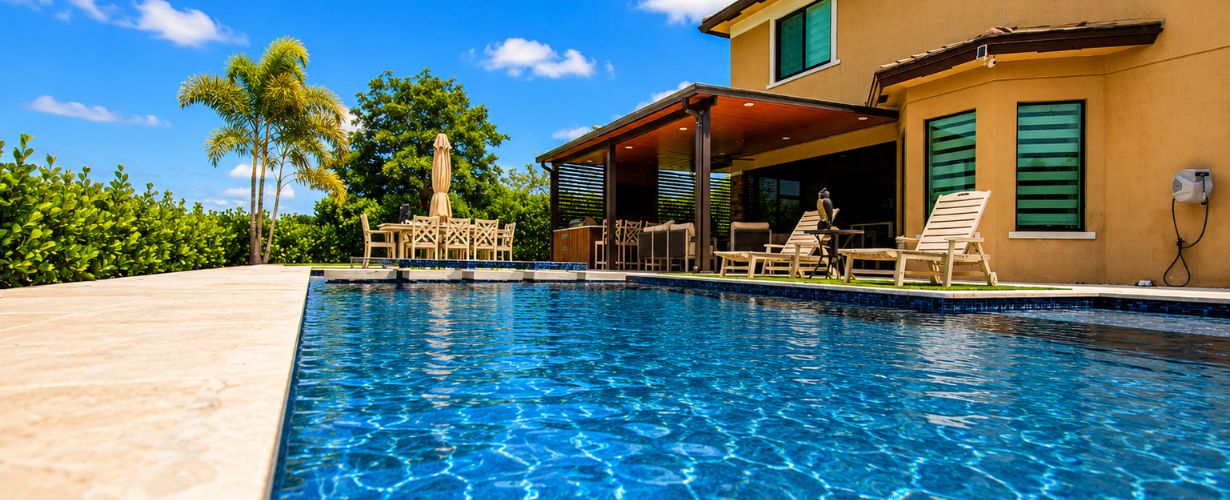
Many pool owners put off fixing leaks because they think it’s not urgent. But here’s the real cost of waiting:
| Problem | Result of Ignoring |
|---|---|
| The shell crack gets bigger | Complete pool surface replacement |
| Plumbing leak under deck | Deck lifting and cracking |
| Wet soil under pool | Shell can shift or collapse |
| Constant refilling | Higher water bill every month |
| Chemical balance off | More chemicals needed, more cost |
Fixing a small crack early might cost a few hundred dollars. Waiting until the damage spreads could mean a full pool renovation.
Conclusion
A well-maintained pool doesn’t just look great, it saves you money and protects the environment. South Florida is a warm, beautiful place to own a pool, but the heat and shifting ground mean pools need regular attention.
Check your pool every month for signs of leaks. Do a bucket test once or twice a year. And if you see anything that doesn’t look right, a wet spot, a stain, or a crack, address it quickly. Your pool should be a place to relax, not a source of stress. With the right care and quick repairs, it will stay that way for years to come.
At Epic Watershapes, we specialize in pool repair, leak detection, and full pool renovations across Boca Raton, West Palm Beach, and South Florida. If you suspect a leak or want a professional inspection, contact our team for a free estimate.