How to Design a Low-Maintenance Pool That Saves You Time and Money
A swimming pool should be a place for relaxation and making memories, not a source of a never-ending cycle of scrubbing, skimming, and chemical balancing. While no pool is 100% maintenance-free, the decisions you make during the design and construction phase dictate whether your backyard becomes a sanctuary or a second job.
Strategic engineering is the foundation of a low-maintenance pool. By choosing the right materials, automated systems, and filtration technology, you can reduce your weekly chores by up to 70%. In high-demand markets like Florida, from Orlando down to Coral Springs, homeowners prioritise efficiency to combat the tropical climate’s impact on water chemistry. This guide explains how to design a high-performance, low-effort pool that saves you significant time and money over its lifespan.
1. Choosing the Right Interior Finish
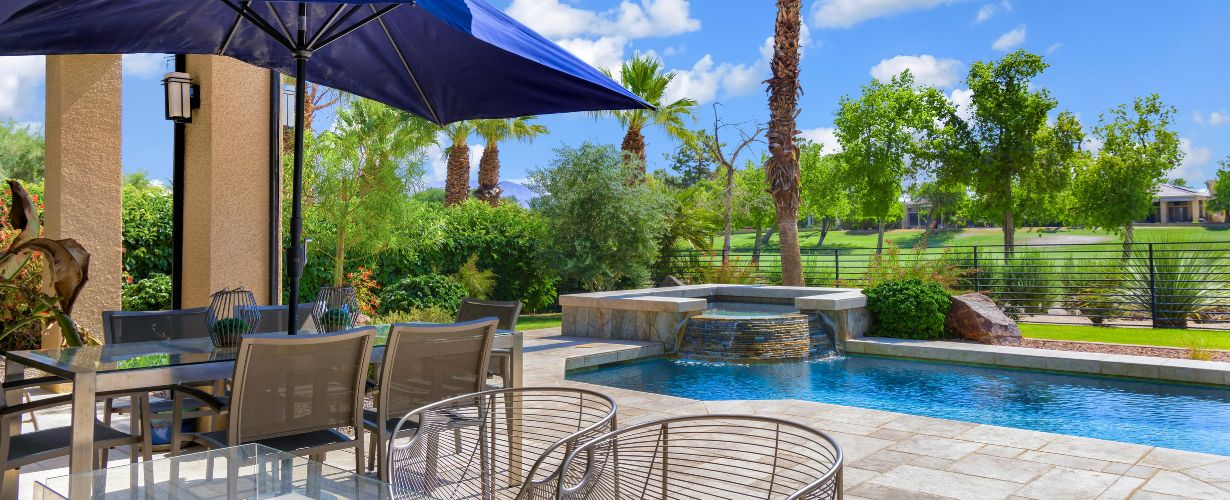
The interior surface of your pool is the biggest factor in how hard you have to work to keep it clean. Different materials have varying levels of porosity, which affects how easily algae can take root.
- Pebble Finishes (Pebble Tec/Pebble Sheen): High-quality pebble finishes are incredibly durable and resistant to chemicals. Because they are non-porous compared to standard plaster, they resist staining and algae growth much more effectively. They also hide small amounts of debris that might settle on the floor.
- Polished Quartz: This is a middle-ground option that offers a smoother texture than pebble but provides better longevity and stain resistance than traditional white marcite. The quartz aggregate is non-reactive, helping maintain a stable pH.
- Glass Tile: While more expensive upfront, glass tile is completely non-porous and incredibly easy to wipe clean. It doesn’t react with pool chemicals, meaning the waterline stays pristine with minimal scrubbing.
2. Advanced Circulation and In-Floor Cleaning Systems
Most pool owners are used to the sight of a robotic vacuum wall-crawler tangled in its own cord. To save time, consider an in-floor cleaning system.
These systems use a series of nearly invisible nozzles built into the floor of the pool. They pop up sequentially to push debris towards a dedicated high-capacity drain. This constant circulation also ensures that heat and chemicals are distributed evenly throughout the water, eliminating dead zones where algae usually starts. Traditional suction or pressure cleaners often miss corners; in-floor systems provide 99% coverage.
3. The Power of Smart Pool Automation
Modern pool technology allows you to manage your entire backyard from a smartphone. Automated controllers act as the brain of your pool, handling:
- Chemical Dosing: Systems like the Hayward OmniLogic or Pentair IntelliCenter monitor pH and chlorine levels in real-time, dispensing exactly what is needed.
- Pump Schedules: Ensuring your water is filtered during off-peak energy hours to save on utility bills.
- Heater Control: Warming the pool or spa only when you intend to use it, preventing unnecessary energy waste.
4. Energy-Efficient Equipment: The Variable Speed Pump
A low-maintenance pool isn’t just about saving time; it’s about saving money. The heart of this efficiency is the variable-speed pump (VSP). Unlike traditional single-speed pumps that run at full power constantly, a VSP can be dialled down to a lower speed for daily filtration.
Running a pump at half speed uses significantly less than half the energy. In states with high energy costs, switching to a VSP can reduce pool-related electricity expenses by up to 80% and puts less strain on your plumbing system, extending the life of your equipment.
Comparison: Standard vs. Low-Maintenance Design
| Feature | Standard Pool | Low-Maintenance Pool |
|---|---|---|
| Interior Finish | Standard White Plaster | Pebble or Polished Quartz |
| Cleaning Method | Manual Vacuum / Suction Cleaner | In-Floor Cleaning System |
| Sanitation | Manual Chlorine Tablets | Saltwater or Ozone/UV System |
| Pump Type | Single-Speed Pump | Variable Speed Pump |
| Waterline Care | Weekly Scrubbing (Porous Tile) | Monthly Wipe-down (Glass/Glazed) |
| Annual Energy Cost | $800 - $1,200 | $200 - $400 |
5. Saltwater Sanitation vs. Traditional Chlorine
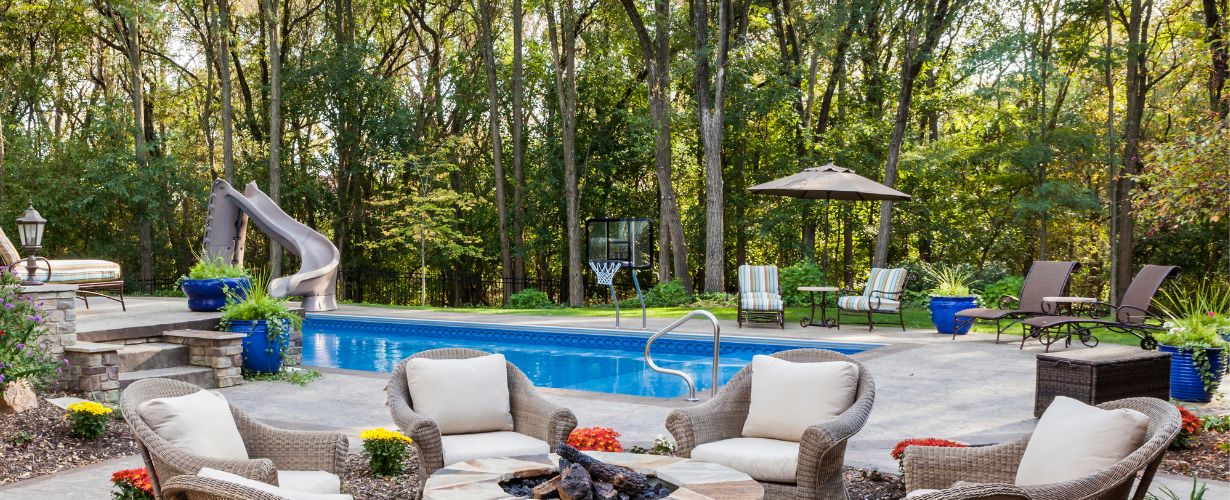
Switching from traditional liquid chlorine or tablets to a salt chlorine generator is a game-changer. These systems convert a low concentration of salt into a steady, controlled stream of pure chlorine.
- Water Quality: Saltwater results in softer water that is gentler on the skin, eyes, and hair.
- Consistency: It eliminates the peaks and valleys of chemical levels. Traditional chlorination involves spikes in chemicals followed by drops where algae can grow. Salt systems provide a constant baseline.
- Convenience: It eliminates the need to buy, transport, and store heavy, corrosive buckets of chlorine.
6. Supplemental Sanitation: Ozone and UV Systems
For the ultimate low-maintenance experience, many luxury pool builders now recommend ozone or UV-C systems. These act as secondary sanitisers.
- Ozone: Injected into the plumbing, it oxidises organic contaminants on contact.
- UV-C: Water passes through a chamber where high-intensity light destroys the DNA of bacteria and viruses.
- Using these systems allows you to maintain much lower chlorine levels (0.5ppm to 1.0ppm), which further reduces the chemical demand and protects your pool equipment from corrosion.
7. Strategic Landscaping and Environment
What surrounds your pool is just as important as what is inside it. To keep your maintenance low, your poolscape should be designed to keep debris out:
- Avoid Deciduous Trees: Trees that drop leaves, needles, or seeds will keep your skimmer baskets full and can potentially clog your pump impeller.
- Choose Evergreens: Use plants like Podocarpus, Palms, or ornamental grasses that stay green and intact year-round.
- Inorganic Mulch: Use river rock, Mexican beach pebbles, or gravel in your planter beds instead of wood mulch. Wood mulch can wash into the pool during heavy Florida rain, altering the water chemistry and staining the interior finish.
- Screen Enclosures: Especially popular in regions with high insect activity, a screen enclosure acts as a massive filter, keeping leaves and bugs out of the water entirely.
8. Use an Automatic Pool Cover
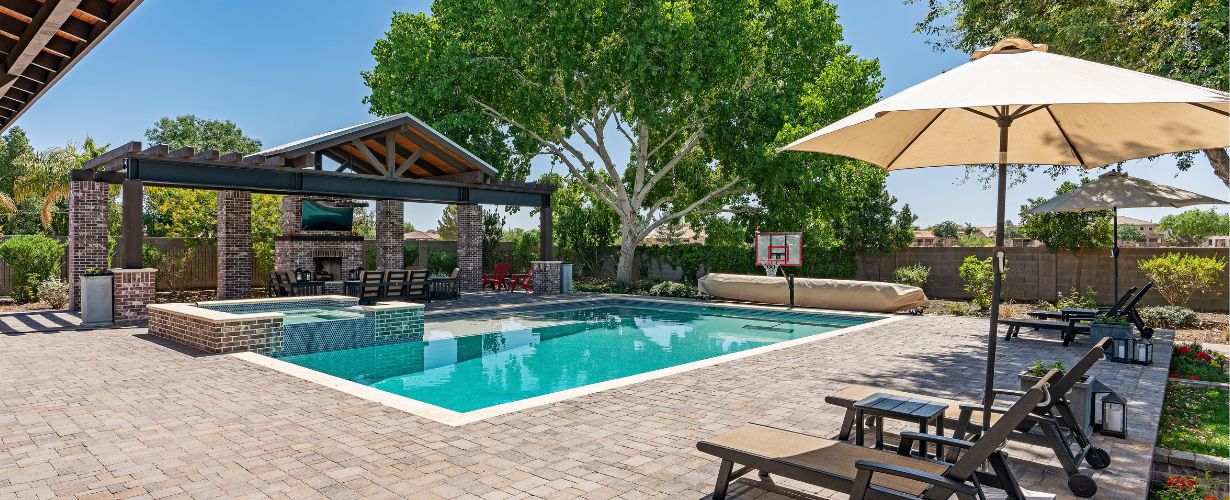
An automatic cover is perhaps the single best investment for a low-maintenance lifestyle. It offers a triple threat of benefits:
- Chemical Retention: It prevents the sun’s UV rays from burning off your chlorine (cyanuric acid only does so much).
- Heat Retention: It acts as a giant solar blanket, keeping your water warm overnight and reducing heater usage.
- Debris Shield: It keeps dirt, leaves, and wildlife out of the water entirely when the pool isn’t in use.
9. Structural Longevity: Drainage and Decking
Poor drainage can lead to run-off entering your pool, bringing with it dirt, fertilisers, and pesticides. When designing your deck, ensure:
- Proper Slope: The deck should slope away from the pool at a minimum of 1/4 inch per foot.
- Deck Drains: Install high-capacity channel drains between the house and the pool to manage heavy downpours.
- Non-Slip, Low-Heat Materials: Choose pavers or travertine over poured concrete. Pavers are easier to repair if a pipe underground ever needs servicing; you simply lift them up and put them back, rather than jackhammering your deck.
10. Simplifying the Filtration System
The larger the filter, the less often you have to clean it. Choosing an oversized cartridge filter is often the best low-maintenance choice. Unlike DE (diatomaceous earth) filters that require messy backwashing and recharging, or sand filters that require frequent backwashing, a large cartridge filter may only need to be sprayed down with a garden hose twice a year.
Conclusion: Maximizing Your Lifestyle Investment
A swimming pool represents a significant investment in both your home’s market value and your family’s daily quality of life. However, the true success of any pool design is not measured by its appearance on the day of the ribbon-cutting; it is measured by how effectively it functions five, ten, and fifteen years down the road. When you integrate smart engineering, automated sanitation, and resilient materials like pebble finishes and glass tile, you successfully shift the focus from labour to leisure.
The initial cost of energy-efficient equipment and automated cleaning systems is often higher, but the long-term savings in electricity, chemical expenses, and repair bills are undeniable. Most importantly, these choices protect the one resource you can never recover time. A low-maintenance pool ensures that your backyard remains a sanctuary for relaxation rather than a relentless checklist of chores. Homeowners who prioritise these advanced design features find the ultimate path to a stress-free aquatic lifestyle, transitioning from being a pool operator to a true pool enjoyer. If you are ready to transform your backyard into a high-performance retreat, contact us today at Epic Watershapes to discuss your project.