
Swimming is one of the few forms of exercise that works the whole body without placing significant stress on the joints. It is used by physiotherapists, sports coaches, and general practitioners for people ranging from competitive athletes to those working through injury rehabilitation. Most people with a backyard pool use it mainly to cool off or unwind, but regular swimming has measurable physical and mental health effects that are worth understanding.
This guide covers what swimming does to the body, how to use a backyard pool for fitness without needing a coach or a long lap lane, and which groups of people tend to get the most out of water-based exercise.
Water creates resistance in every direction. Moving through it requires constant muscle engagement, unlike running or cycling where resistance comes mainly from one direction. Swimming works the arms, legs, core, back, and shoulders at the same time throughout every stroke.
Buoyancy reduces the load on joints considerably. Being submerged to chest height cuts the effective weight carried by the joints by around 75 percent. The cardiovascular and muscular effort of a swim session happens with far less physical impact than the same effort would produce on land. This makes swimming accessible to people who cannot tolerate the impact of running or other weight-bearing exercise.
Regular swimming strengthens the heart muscle and improves the efficiency with which the body delivers and uses oxygen. Sustained aerobic exercise in the pool over time lowers resting heart rate, supports healthy circulation, and contributes to lower blood pressure in many people.
Sessions do not need to be long or fast to produce a training effect. Twenty to thirty minutes of moderate continuous effort is enough. Swimming also allows people to sustain aerobic effort for longer than many land-based activities because the body temperature stays lower in water, which delays the onset of fatigue.
Each swimming stroke places demand on a different set of muscles, but all strokes require the core to stabilise the body continuously through the water. This is why regular swimmers tend to build trunk strength and postural control as a byproduct of swimming, even without specific core training.
Technique does not need to be polished to get the benefit. The water provides resistance regardless of stroke quality, so muscle endurance develops even with a basic, imperfect stroke.
Physical exertion in water tends to produce reliable improvements in sleep quality. The combination of aerobic effort and the sensory effect of being submerged, reduced noise, water pressure on the body, and the rhythm of movement, lowers the kind of mental alertness that makes it hard to fall asleep.
People who take up regular swimming often notice they fall asleep faster and wake less often through the night. Swimming in the late afternoon or early evening appears to have a more pronounced effect on sleep than morning sessions for most people, though the difference is not dramatic.
Regular swimming reduces cortisol levels and has been associated with lower self-reported anxiety in multiple studies. The repetitive nature of swimming strokes, combined with the sensory environment of water, produces a mental state that is closer to meditation than most other physical activities.
Even short, low-intensity sessions have a measurable effect on mood. The benefit is not dependent on reaching a particular level of exertion. Ten minutes of relaxed swimming after a stressful day produces a different mental state than ten minutes of sitting still, and most regular swimmers report that this becomes one of the main reasons they continue the habit.
A thirty minute moderate swim burns a comparable number of calories to a thirty minute jog, depending on stroke and effort level. The difference is the recovery. Swimming produces far less post-exercise soreness and joint fatigue than running, which makes it easier to exercise frequently without requiring extended recovery days between sessions.
Body composition changes from exercise are driven more by frequency and consistency over months than by intensity in any single session. Swimming tends to be something people can maintain consistently over long periods without the accumulating wear that causes many people to stop running or high-impact training.
One reason swimming tends to work well as a long-term exercise habit is that it does not require a baseline level of fitness to start. The water does a lot of the physical work of supporting the body, which means people who cannot tolerate running, cycling, or gym training for physical reasons can usually still swim.
This matters practically for people dealing with arthritis, joint pain, hip or knee problems, or recovering from surgery, where land-based exercise causes discomfort or is not medically advisable. It also applies to older adults who need cardiovascular and strength exercise but want lower injury risk, people at higher body weights where joint load makes other exercise painful, and pregnant women in later stages of pregnancy who need low-impact movement. The effort level and duration can be adjusted to almost any physical starting point, which is harder to do with most other forms of exercise.
Many people assume fitness swimming requires a long pool with dedicated lanes. Most backyard pools are too short for that kind of training, but pool length is not what determines whether a pool can be used for fitness.
Water walking in chest-deep water builds leg and core strength through resistance alone. Water jogging achieves the same at higher intensity. Sustained treading water is a genuine cardiovascular workout. Wall kicking works the hips and legs without moving across the pool at all. In shorter pools, repeated lengths with brief rests at each end produce a training effect similar to longer pool sessions.
For pools where lap swimming is not practical at all, a counter-current jet system in a cocktail pool or spa allows continuous swimming in place against a current. Pool size stops being a factor entirely with this kind of setup.
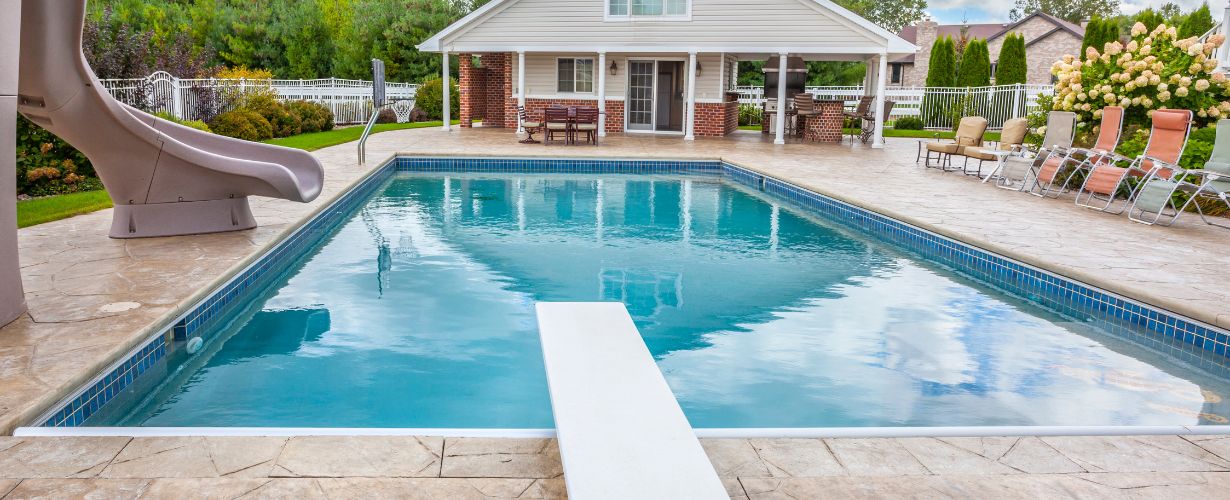
No equipment, program, or prior swimming ability is required to start using a pool for fitness. Time in the water is the only variable that matters at the beginning.
Start with 15 to 20 minutes of continuous movement. The stroke does not matter. The pace does not matter. Keeping moving for the full duration without stopping is the only target. Once that feels manageable, extend the session or introduce simple intervals of harder effort followed by easier effort. Three to four sessions a week at around 30 minutes each produces measurable fitness improvement within weeks for most people new to regular swimming. Water temperature between 27 and 29 degrees Celsius suits most people for exercise. Warmer water encourages relaxation but makes sustained effort harder to maintain.
A backyard pool removes the logistical barriers that interrupt gym or public pool routines. No travel, no bookings, no timetable. That accessibility makes it easier to swim on days when motivation is lower, which is where consistency is actually built or broken.
A spa connected to the pool serves a practical function after exercise. Warm water after a swim session reduces delayed muscle soreness and supports circulation during recovery. Many homeowners factor this into the pool construction plan from the start rather than considering it separately later.
A pool used several times a week for exercise needs more frequent attention than one used occasionally. Chlorine depletes faster with regular physical activity in the water. pH shifts more often. The filter accumulates more debris and fine particles.
Testing the water two to three times a week rather than weekly keeps chemistry stable. If the pool surface has deteriorated, swimmers doing longer sessions often notice skin irritation and roughness during and after swimming. A degraded plaster surface holds bacteria and resists cleaning. Pool resurfacing is worth considering if the surface condition is affecting the experience of using the pool regularly.
Swimming covers cardiovascular fitness, strength, flexibility, stress reduction, and sleep in a single activity with low injury risk. The equipment required is minimal and the water is already there for anyone who owns a pool.
For pool builds, upgrades, or questions about fitness-focused pool design in Boca Raton, West Palm Beach, Jupiter, and Palm Beach County, the team at Epic Watershapes can help. Financing is available across all project types.
Get Your Custom Pool & Spa Quote
Free 3D design and Financing options.