
By Thiago Machado, Co-founder of Epic Watershapes™ with over 10 years of experience in pool construction
One question comes up in almost every serious pool planning discussion: “Which type of pool should we choose?”
It’s rarely just about construction methods or materials. This question is deeper—it’s about the memories you’re investing in: birthday parties yet to be celebrated, summer mornings still to be enjoyed, family gatherings not yet held.
While the internet is full of opinions, it rarely gives honest guidance to help you make the right choice for your own needs. Let’s fix that.
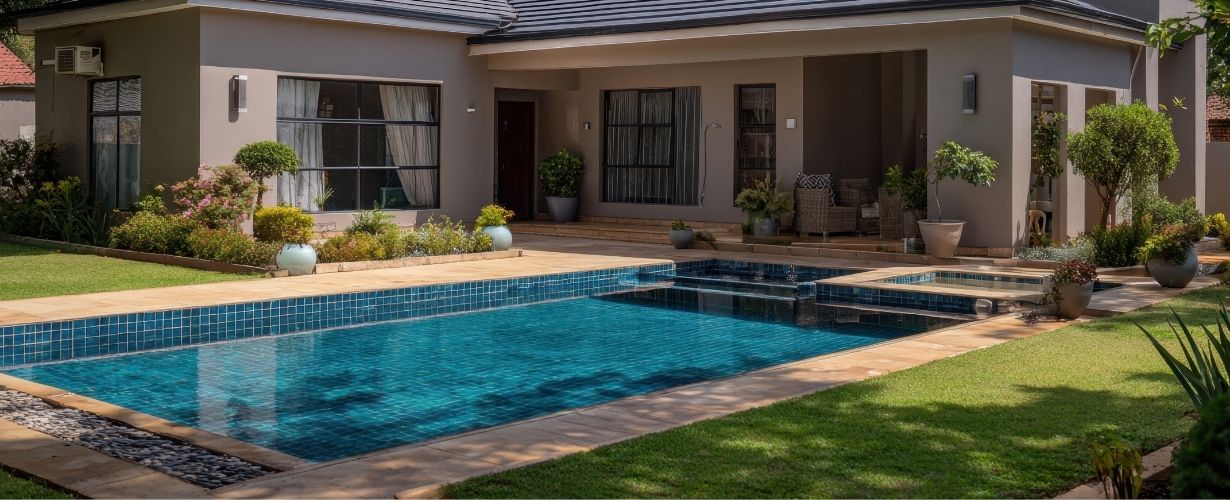
Choosing the right pool starts with understanding three very different approaches to construction, durability, and design flexibility.
Gunite pools are built on-site from scratch. Steel rebar frames are sprayed with concrete, then finished with your choice of materials. They’re permanent, sturdy, and can be customized to almost any shape or size.
Fiberglass pools come as a single, pre-made shell that’s lowered into a dug-out space using a crane. They follow proven designs, meet high-quality standards, and can be installed much faster than other types.
Vinyl liner pools use flexible liners stretched over a frame. They’re more affordable and easier to set up, though they usually don’t last as long and offer fewer design options.
Each type has its strengths and weaknesses. Knowing what matters most to you—whether it’s customization, speed, or cost—will help ensure you enjoy your pool for years to come.
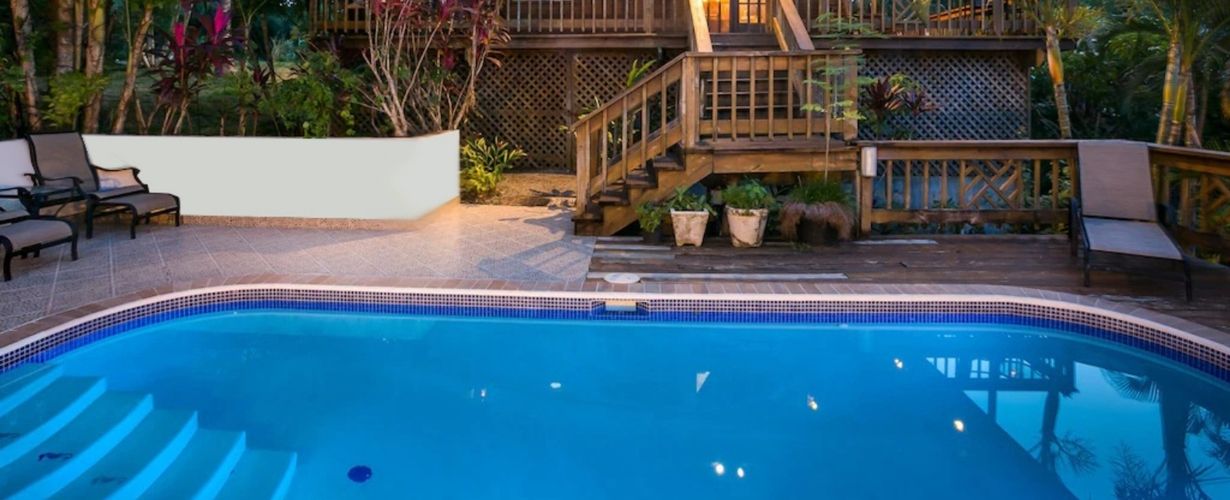
When it comes to pool customization, an interesting trend emerges: many families think they need more flexibility than they actually do, while some truly benefit from the ability to customize every detail.
Fiberglass pools come in a wide variety of pre-designed shapes—far beyond simple rectangles. Today’s options include built-in spa areas, tanning ledges, and elegant curved designs. For standard rectangular backyards in places like West Palm Beach or Boca Raton, or for homeowners who prefer a classic look, these tried-and-true designs usually cover most needs beautifully and efficiently.
Gunite pools are the go-to choice when your vision goes beyond standard shapes. They’re ideal for pools that wrap around existing structures, match specific home styles, feature vanishing edges for waterfront views, or take on unique shapes that can’t be made as single-piece shells. In lakefront estates in West Palm Beach or luxury homes in Boca Raton, the ability to fully customize often makes the extra cost worthwhile.
Research from the Association of Pool & Spa Professionals shows that custom gunite pools tend to hold higher property values in luxury markets because they’re seen as permanent architectural features rather than just added amenities.
Vinyl pools fall in between: they allow more customization than fiberglass but less than gunite.
The takeaway? Families unsure about their customization needs usually don’t need full flexibility. But for those who know they want it, compromising isn’t ideal.
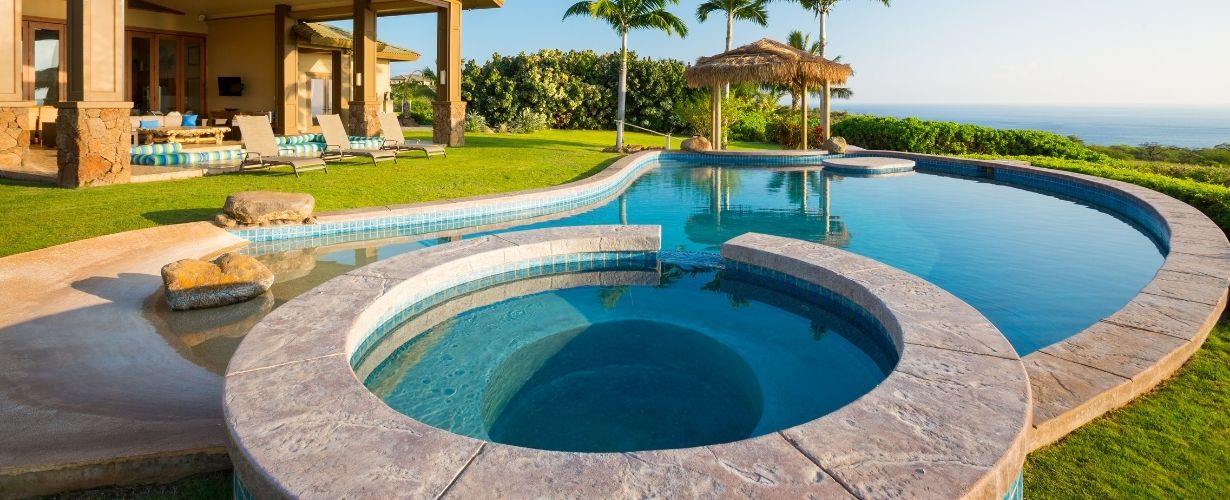
Think in decades, not just years, when it comes to pool durability.
Gunite pools are built to last. With proper maintenance and resurfacing every 10–15 years, a well-constructed gunite pool can easily last 50+ years. The concrete shell itself is almost permanent—these pools are designed to outlive mortgages and stay functional for generations.
Fiberglass pools also hold up well over time. High-quality gelcoat surfaces can last 25–30 years, and the fiberglass structure stays strong for many decades. Research in the pool industry shows that fiberglass shells remain structurally sound long-term, though the surface may eventually need refinishing. The key is careful transportation and installation: experienced crews are needed to avoid stress cracks when placing the pool with a crane. With proper installation, this risk is very low.
Vinyl liner pools usually last 7–12 years before the liner needs replacing. This isn’t a major problem—replacement costs are lower today—but it is something to factor into long-term ownership planning.
The bigger picture matters. If you’re building a pool in a “forever home” in established areas like West Palm Beach or Boca Raton, where multiple generations may use it, thinking in terms of decades makes durability decisions much clearer.
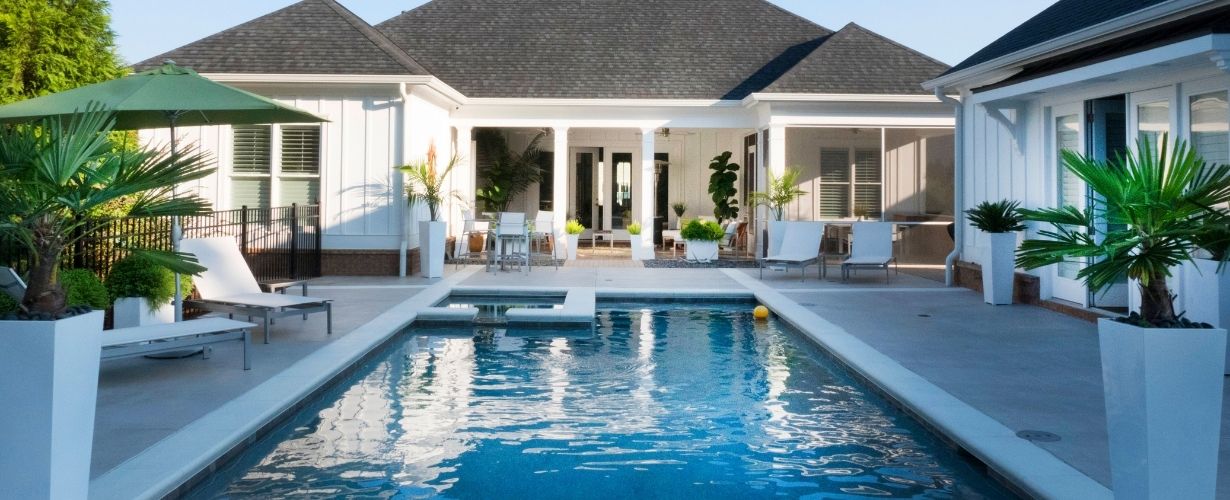
Installation times can differ a lot depending on the type of pool.
Fiberglass pools are fast. Under the right conditions, the whole process—from excavation to shell delivery, crane placement, plumbing, and backfilling—can be done in about a week. For families in places like West Palm Beach and Boca Raton who want a pool ready for summer fun, fiberglass is hard to beat.
Gunite pools take more time. Excavation, steel framework, gunite spraying, plumbing and electrical work, tile installation, and finishing usually take 8–12 weeks. The exact timeline depends on the pool’s design, the weather, and any custom features. This longer process means more construction activity, steady progress, and multiple quality checks. On the plus side, it also offers plenty of chances to customize and watch a one-of-a-kind pool take shape on your property.
Vinyl pools usually fall somewhere in between, taking about 2–4 weeks, depending on the design and site conditions.
Ultimately, it’s not about which timeline is “better”—it’s about what fits your schedule and planning needs.
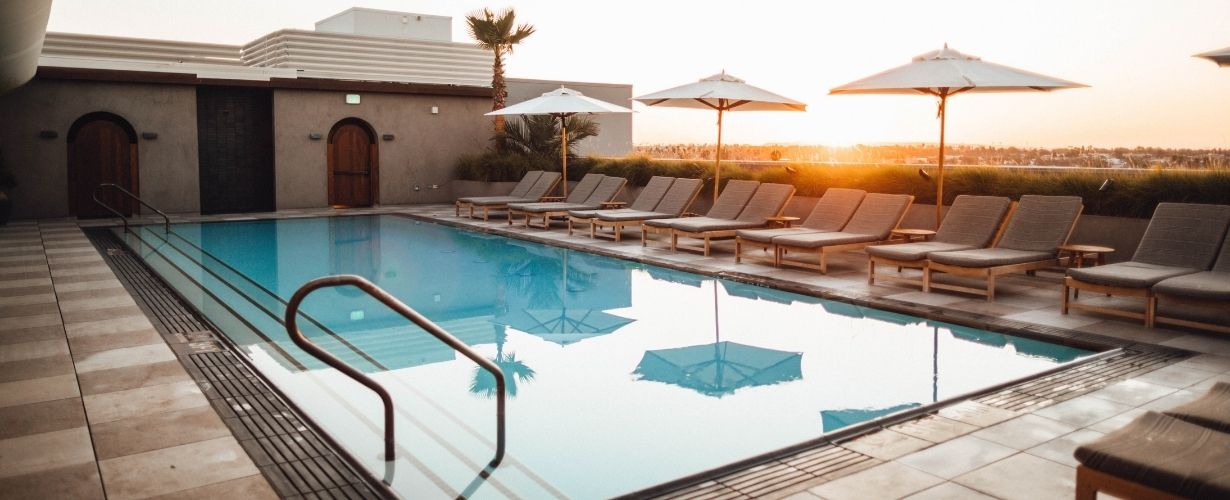
Picture yourself sipping coffee on your patio as the morning sun glints off your pool. What kind of visual experience matters most to you?
Gunite pools give you almost unlimited design flexibility. You can choose from classic white plaster, exposed aggregate, glass tiles, natural stone coping, or the increasingly popular pebble finishes. The options are only limited by your imagination and budget. Each finish creates a unique feel—think Mediterranean elegance in West Palm Beach, sleek modern minimalism in Boca Raton, or tropical resort vibes across Palm Beach. Different textures play with sunlight throughout the day, offer subtle color shifts, and feel solid underfoot.
Fiberglass pools have come a long way in looks. Modern gelcoat finishes now offer a variety of colors and textures that mimic higher-end materials. While they provide more design choices than in the past, they’re still not as customizable as gunite. The trade-off is that you choose from pre-made options rather than designing exactly what you picture. For many families in West Palm Beach and Palm Beach, the available options are stunning. But if you have a very specific architectural vision, fiberglass might feel a bit limiting.
Vinyl liner pools have also evolved. Patterns and colors are much more varied than the simple blues of decades ago, but they still can’t match the depth of color or solid feel of gunite or fiberglass.
Some homeowners care deeply about subtle aesthetic details, while others focus more on functionality or maintenance. Both approaches are completely valid.
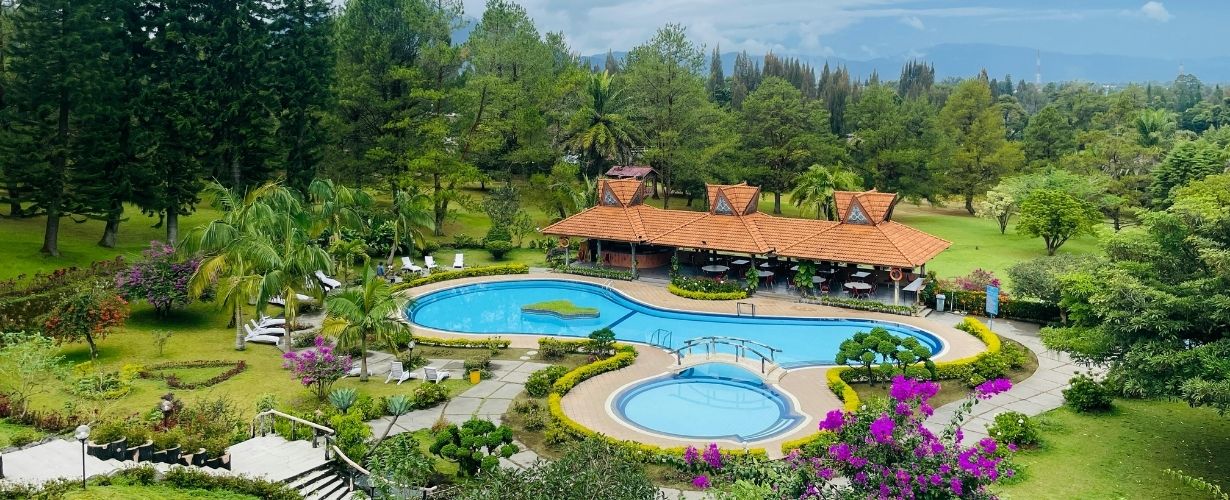
All pools need maintenance, but the effort and frequency can vary a lot.
Fiberglass pools are generally much easier to care for. Their smooth gelcoat surfaces resist algae, need fewer chemicals, and are easier to clean compared to textured gunite finishes. Studies consistently show fiberglass pool owners spend less time and money on regular upkeep.
This isn’t marketing—it’s science. Smooth, non-porous surfaces don’t give algae a place to grow like slightly porous plaster or aggregate finishes do.
Gunite pools, on the other hand, need more attention. You have to monitor chemical levels carefully, brush walls more often, and sometimes do acid washes to remove stains or buildup. Keeping the chemicals balanced properly can extend the life of the plaster, so regular care is key to maintaining the pool’s appearance over time.
Whether this matters depends on your priorities. Busy families who see maintenance as a chore often value ease of care. Homeowners who enjoy maintaining their pool—or who hire weekly services, which is common in West Palm Beach and Boca Raton—may not see it as a big deal.
Vinyl pools have their own needs: avoiding punctures, checking seams regularly, and keeping chemicals balanced, since harsh chemicals can wear out the liner faster.
At the end of the day, your “maintenance personality” makes a difference. Are you meticulous or laid-back? Do you enjoy the process, or see it as a necessary chore?
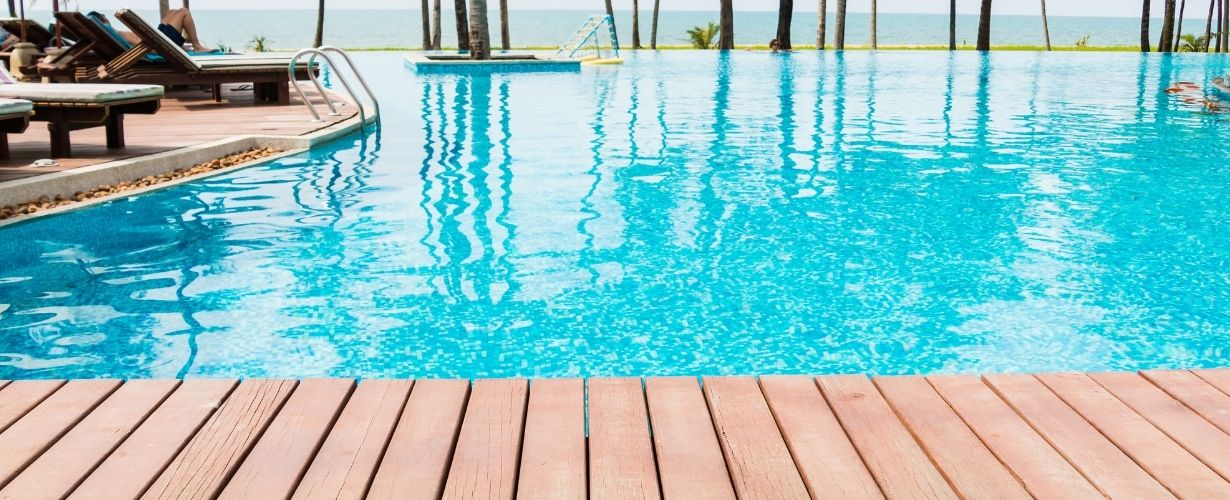
Let’s talk money—straightforwardly.
When it comes to installation costs, pools generally go from least to most expensive like this: vinyl, fiberglass, then gunite. But the upfront price is only part of the story.
Vinyl pools usually cost $25,000–$40,000 to install. However, they need a new liner every 7–12 years, which runs $4,000–$7,000 each time. Over 30 years, that could mean 2–3 major replacements, adding $10,000–$20,000 or more.
Fiberglass pools cost $40,000–$70,000 to install, but with proper care, they rarely require major repairs for decades. Paying a bit more upfront can save you from costly renovations later.
Gunite pools start around $50,000 and can exceed $150,000, depending on size, features, and finishes. They need resurfacing every 10–15 years, costing $5,000–$15,000 each time—so over 30 years, expect 2–3 resurfacing cycles.
Here’s the key point: real estate experts consistently say custom gunite pools add more value to high-end homes than pre-made fiberglass pools. This is especially true in luxury markets, where buyers expect custom touches.
For homes in the $450,000–$600,000 range, like in West Palm Beach or Palm Beach neighborhoods, this can make a noticeable difference. For luxury estates worth $800,000–$2 million+ in areas like Boca Raton, Wellington, or West Palm Beach’s exclusive enclaves, the impact is even bigger.
So, the real question isn’t just about cost—it’s about what you want to prioritize: lowest total expense? Easiest maintenance? Maximum property value? Or a pool that perfectly matches your vision?
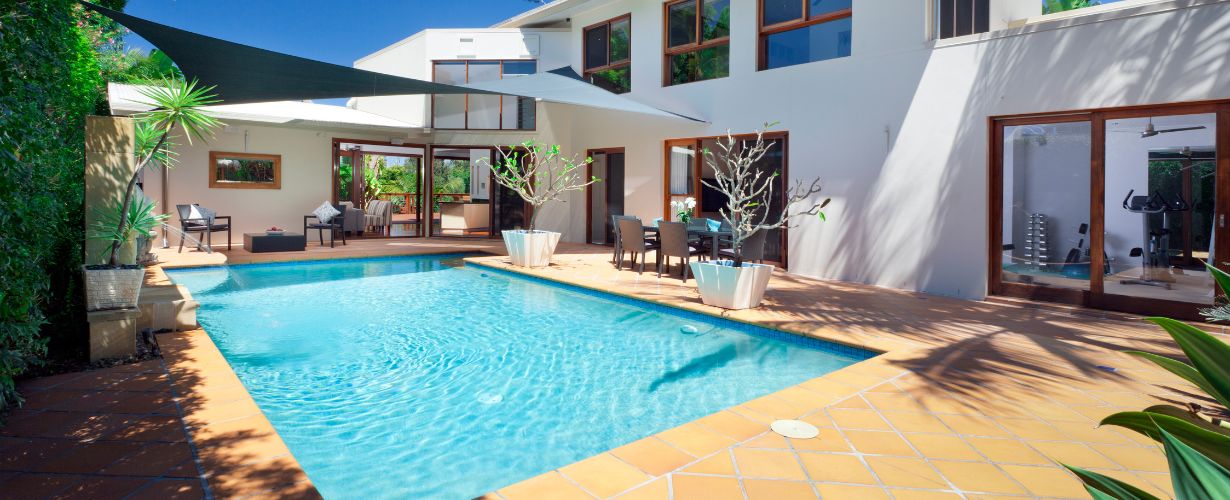
Many pool comparison guides overlook how local climate affects pool performance. South Florida’s weather brings unique factors that influence your pool’s lifespan and costs.
With swimming possible year-round, pools here are used every month, which dramatically lowers the cost per swim compared to northern regions where pools sit idle for half the year.
Strong sun and heat can wear out vinyl liners faster, often shortening their lifespan to the lower end of the typical 7–12 years. That’s why many West Palm Beach and Palm Beach pool companies focus on efficient, high-quality vinyl liner replacements.
Fiberglass pools handle Florida’s climate very well. Gelcoat surfaces resist UV damage, and there’s no worry about freeze-thaw cycles that can harm pools up north.
Gunite pools also thrive in South Florida. The stable ground, lack of frost, and warm temperatures create perfect conditions for concrete curing, so climate rarely causes structural issues. Resurfacing is usually needed due to chemical wear rather than weather.
Finally, the subtropical environment keeps pool heating costs low, making it easy to enjoy a truly year-round swimming season.
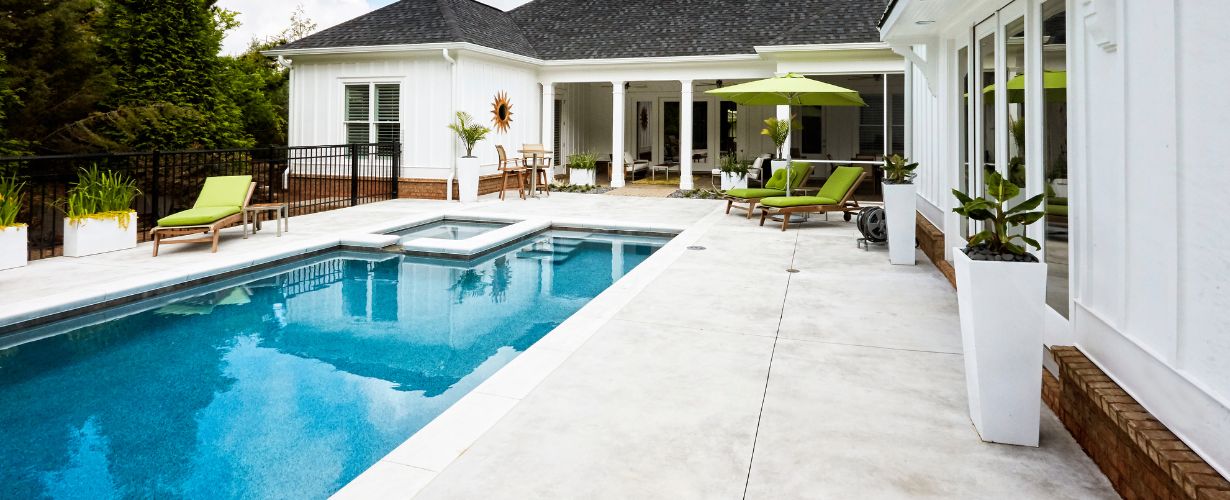
Families often report the highest long-term satisfaction when their pool choice matches their priorities.
Fiberglass pools tend to be the best fit for those who:
Gunite pools are ideal for those who:
Vinyl pools suit those who:
These patterns show how different pool types align with different family priorities.
Think about what you might regret five years from now—not just the numbers or maintenance schedules, but the bigger picture.
Will going with the faster option lead to regret if it changes the shape or design you really wanted? Or will taking the longer construction route feel like a missed opportunity after skipping an entire summer of swimming?
Will saving money now cause regret later when paying for a third liner replacement? Or will spending extra for custom features feel unnecessary if you end up not needing them?
These aren’t just hypothetical questions—they’re meant to help families reflect on what truly matters for their unique situation.
There isn’t a single “best” type of pool—there’s only the best pool for you.
If you want something fast and straightforward, fiberglass gives both speed and simplicity without sacrificing quality or style for most families. If your property or vision calls for something unique, gunite offers endless customization and long-lasting quality. And if budget is your main concern, vinyl lets you enjoy pool ownership at the most affordable starting point.
Industry experience shows that families who choose based on their real priorities—not what the neighbors have, not online opinions, and not just the lowest price—are the ones who stay happy with their choice for decades.
Whether you’re building in the classic neighborhoods of West Palm Beach, the growing areas of Palm Beach Gardens, the lakefront estates of Boca Raton, or the family-friendly streets of Wellington, the “right” pool isn’t the one labeled best by everyone else. It’s the one that fits your family’s needs, suits the way you live, and reflects what matters most to you.
That pool—whatever type it ends up being—becomes the place where kids learn to swim, where summer evenings turn into memories, and where the sound of splashing water becomes the soundtrack of home.
And that’s why choosing wisely matters.
About the Author:
Henry Pierce is co-owner of aquaelitepool.com, and he brings 15+ years in luxury construction expertise to Aqua Elite Pool, combining engineering precision with designs that transform ordinary spaces into environments where families naturally gather and memories happen. When he’s not building pools, he spends time with his family, reading good books or playing tennis.
Get Your Custom Pool & Spa Quote
Free 3D design and Financing options.