
There’s a moment, often around 2 PM on a July afternoon, when every Florida pool owner learns a hard lesson about their deck. Maybe it’s when your daughter jumps across the pavers as if they’re lava. Or when your bare feet hit blazing-hot concrete, and you quickly dance back to the grass. Or perhaps it’s during your first tropical storm, when your beautiful deck turns into an unexpected slip-and-slide.
That moment? It’s an expensive lesson.
I’ve seen too many families spend $80,000 on a gorgeous pool, only to realize six months later that their deck is either scorching, dangerously slippery, or already cracking and staining. The pool is perfect—but the deck becomes a problem they’ll deal with every summer for years.
Here’s what no one tells you when choosing materials: in Florida, your deck matters as much as your pool. Maybe even more. Kids might only use the pool a few times a week, but they walk on the deck every time they step outside. Guests notice how comfortable, or not, it is to walk barefoot. And your home’s value is influenced by how well that surface stands up to our relentless sun.
This isn’t about picking the “perfect” material, because that doesn’t exist. It’s about knowing the truth about each option, what it’s really like to live with, and which choice fits your lifestyle in West Palm Beach.
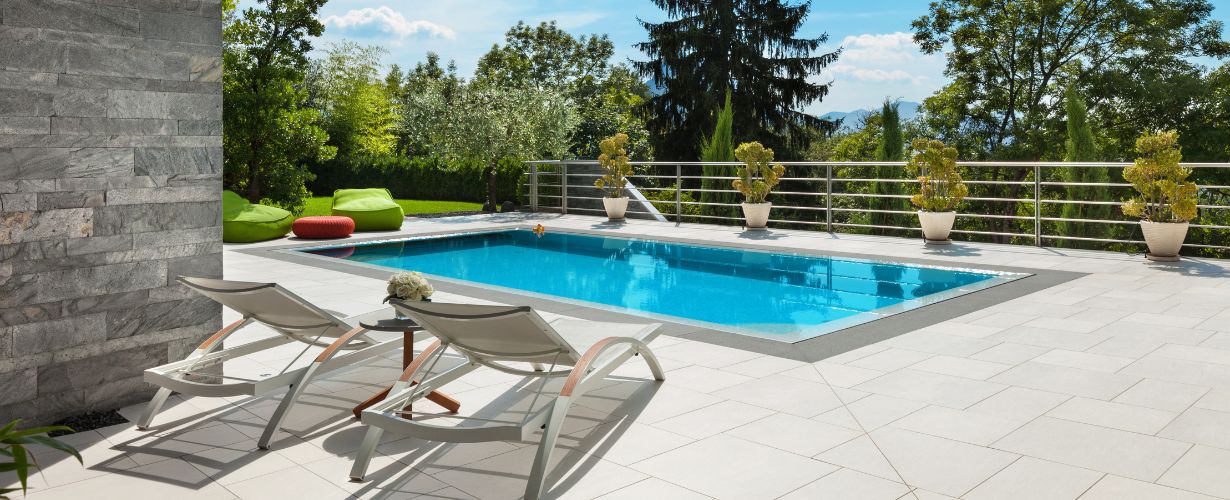
Walk through any upscale neighbourhood from South Florida to Celebration, and you’ll notice five decking options that dominate the scene. Each has its fans, and its critics, and each has earned a spot thanks to its unique advantages.
Travertine pavers are common in high-end projects where homeowners value comfort over cost. This natural stone looks elegant and, importantly, stays cooler than almost anything else. Step on travertine under the midday sun, and it’s easy to see why luxury resorts choose it despite the higher price.
Concrete pavers hit a sweet spot for families seeking durability, style, and reasonable costs. They come in countless shapes, colors, and patterns, stand up well to Florida’s weather, and—if installed properly—can last for decades with minimal issues.
Poured concrete is the go-to choice for many contractors for good reason: it’s affordable, straightforward, and gets the job done. But “getting the job done” isn’t always the same as creating a backyard you truly love.
Other natural stones like bluestone, flagstone, and sandstone appeal to homeowners looking for a classic, organic look. They are undeniably beautiful, but they require more maintenance and can be unpredictable in Florida’s climate.
Composite decking is the modern option, offering low maintenance and consistent performance. Technology has come a long way, though some traditionalists still recall early versions that warped or faded.
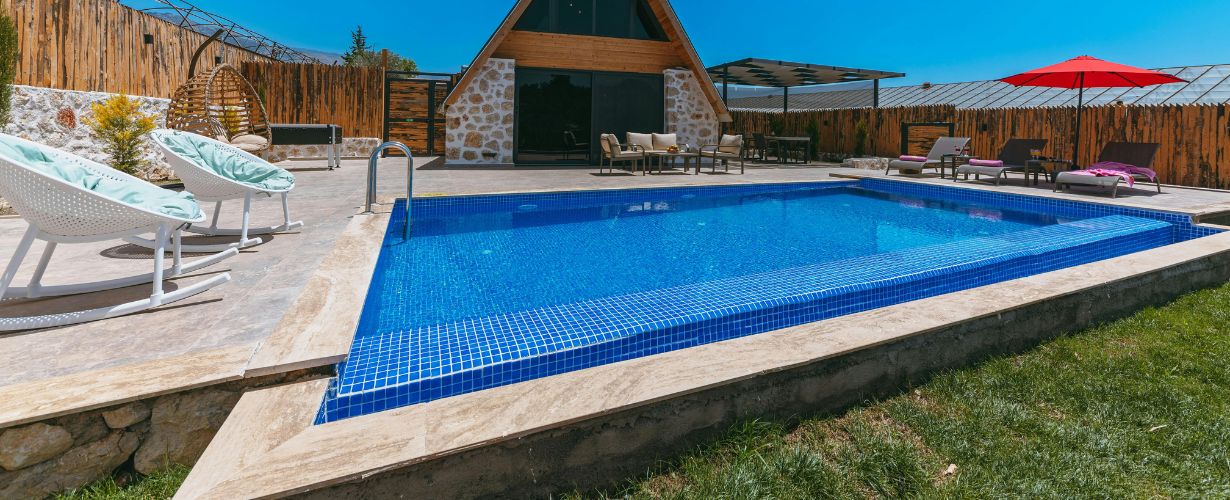
Let’s face a common Florida backyard problem: surfaces getting hot in direct sunlight.
Marketing loves to use terms like “heat resistant” or “stays cool,” but the truth is simple—nothing stays cool under the Florida sun except shade or water. The real question isn’t whether a surface heats up, but how hot it gets and how quickly it cools down.
Travertine is popular for a reason. Its porous structure and light colour reflect sunlight rather than soak it in. Put your hand on travertine and concrete at 2 PM, and the difference is obvious. One feels walkable; the other can feel painful. That makes a big difference for real use—kids can run safely, adults can relax without burning their feet.
Concrete pavers are in the middle. Lighter colors help a lot, and textured surfaces often feel slightly cooler than smooth ones because less of your foot touches the material at once. But dark concrete pavers in full sun? Still hot enough to test your tolerance.
Standard poured concrete? It basically becomes a griddle. Gray concrete under the Florida sun is genuinely uncomfortable to walk on barefoot. Lighter colors can help a little, but physics will always have the final say.
Natural stone varies. Bluestone usually gets hotter, flagstone depends on its color and density, and sandstone tends to stay fairly comfortable, though it has its own challenges.
Composite decking has gotten better at staying cool over the years, but it’s still warmer than travertine or light-coloured pavers. The upside is very low maintenance.
The most practical solution in Florida? Shade. Pergolas, shade sails, and mature trees can turn almost any surface from unbearable to enjoyable. Even the hottest material is manageable when it spends the hottest hours in shadow.
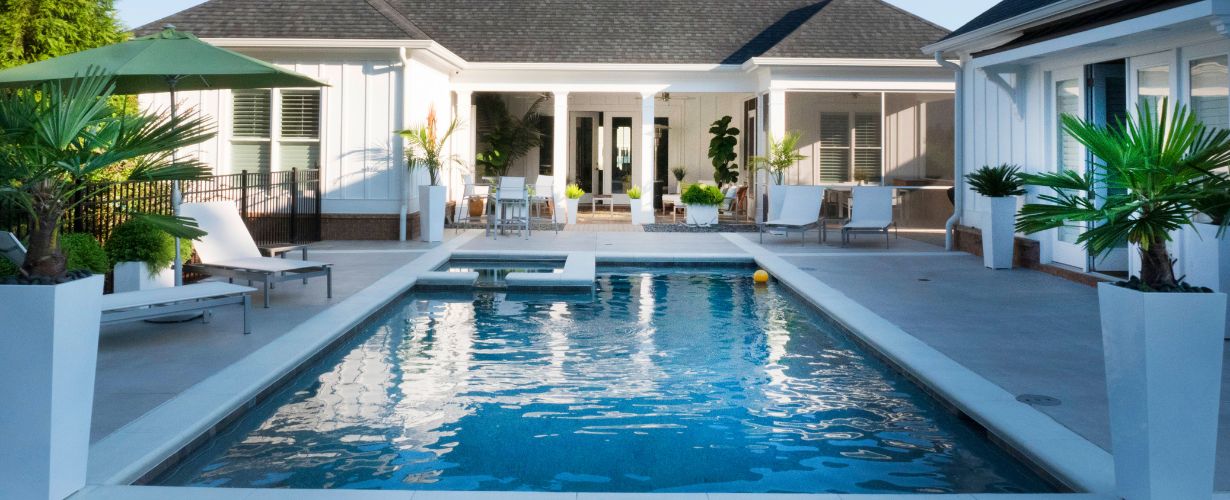
All materials can be slippery when wet. That’s not a flaw—it’s just how water behaves on solid surfaces. The key difference is how slippery and the texture of the material.
Travertine naturally has a slightly rough texture, giving excellent grip even when wet. It’s comfortable to walk on and explains why many luxury resorts and hotels choose it for pool areas, despite its higher cost.
Concrete pavers can be made with textured surfaces specifically for wet areas. High-quality pavers have slip-resistant finishes that work really well. But not all pavers are equal—cheaper options often cut corners on texture, prioritizing cost over safety.
Poured concrete can be tricky. Smooth, troweled concrete is very slippery when wet. But concrete finished with a broom texture or exposed aggregate gives reliable traction. The issue? Many contractors prefer smooth finishes because they’re faster and cheaper. If you choose poured concrete, picking the right finish is not optional—it’s essential.
Natural stone varies a lot. Flagstone’s uneven surface usually provides good grip. Polished stones, however, can be very slippery. For pool areas, always choose a honed or textured finish.
Composite materials often include texture in their design. Most modern composite decking is safe when wet, though quality can vary between brands.
The simple truth: any of these materials can be safe if chosen and installed correctly, and any can be risky if shortcuts are taken. Instead of asking, “Is this safe?” ask your contractor, “What slip-resistance features does this material and finish include?”
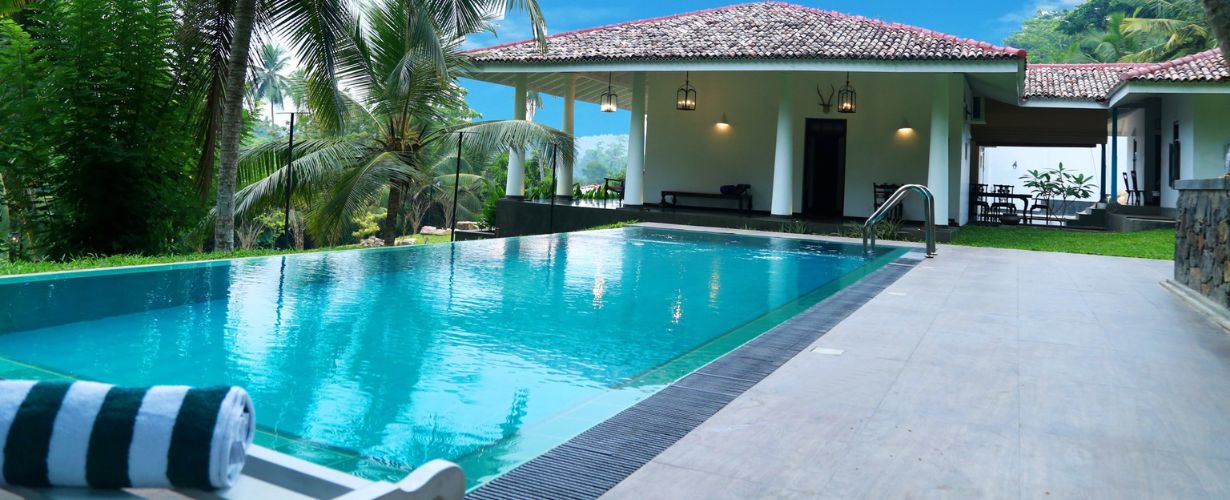
Maintenance talk often swings to extremes—either something is called “maintenance-free” (nothing truly is) or a “high-maintenance nightmare” (rarely accurate). Let’s look at what really happens over time.
Travertine needs sealing every 2–3 years and occasional cleaning to stop organic growth in its pores. This is simple work—usually just an afternoon every few years, plus occasional power washing. The benefit is a surface that ages gracefully, gaining character instead of looking worn. Stains rarely get through properly sealed travertine, and cracks are uncommon when installed correctly.
Concrete pavers require less frequent sealing and handle Florida’s conditions very well. If one paver gets damaged, it can be replaced without disturbing the rest—a practical advantage. Pressure washing once or twice a year keeps them looking fresh. Cracking is rare because each paver moves independently rather than as one solid slab.
Poured concrete behaves differently. Sealing helps with stains but can’t prevent hairline cracks caused by Florida’s shifting soils and temperature changes. These cracks usually don’t affect structural strength but do impact appearance. Resurfacing every 5–10 years is necessary if you care about looks. Stains are also more noticeable and harder to remove than with pavers.
Natural stone maintenance depends on the type. Softer stones, like sandstone, need sealing more often and are more vulnerable to wear. Harder stones, like bluestone, are easier to care for but still benefit from occasional maintenance. Professional cleaning every few years helps all natural stones look their best.
Composite decking delivers on its low-maintenance promise better than many expect. Simple soap-and-water cleaning handles most needs, and no sealing is required. Damaged boards can be replaced individually. The trade-off is that composite doesn’t develop the same natural character over time—it keeps its original look or fades evenly.
The maintenance “winner” depends on your priorities. If low ongoing effort matters most, composite takes the lead. If you don’t mind occasional attention for a more luxurious appearance, travertine or quality pavers are better choices. Poured concrete, despite its lower initial cost, ends up requiring more maintenance.
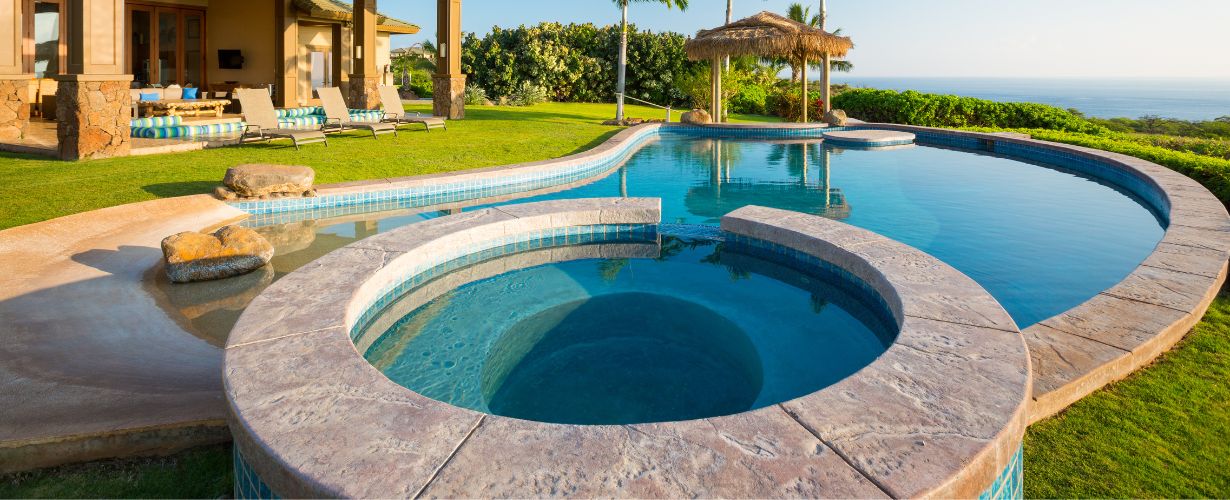
When people talk about pool decking costs, the conversation usually starts with price per square foot: concrete costs around $8–12, pavers $15–25, and travertine $25–40. While these numbers are technically correct, they don’t tell the full story.
Why? Because they don’t consider how difficult the installation might be, the long-term value, or the fact that your deck shapes both the look of your pool and your home’s overall value.
For example, a $40,000 pool with $8,000 of basic concrete decking creates a total investment of $48,000. Swap that for $18,000 worth of beautiful pavers or travertine, and your total rises to $58,000. But here’s the key: that concrete deck might add about $50,000 to your home’s value, while the upgraded option could boost it by $80,000–$100,000. The higher-end material doesn’t just look better—it transforms how buyers see your outdoor space.
I’ve seen homeowners in West Palm Beach hesitate over spending an extra $10,000 on travertine, only to have their homes appraise $40,000 higher than similar properties with standard concrete. Of course, results aren’t guaranteed—market trends and overall home quality still matter—but premium materials reliably deliver more value.
It’s not just about resale value; it’s about daily enjoyment too. You interact with your deck every day. A comfortable, attractive surface makes a big difference, while a cheap, uncomfortable one can be disappointing for years.
If you’re mindful of the budget, there are smart ways to balance cost and quality. Using premium materials in high-visibility or high-traffic areas, and more affordable options elsewhere, creates a strong visual impact without overspending. Often, carefully placed high-quality materials give better results than covering every inch with mediocre options.
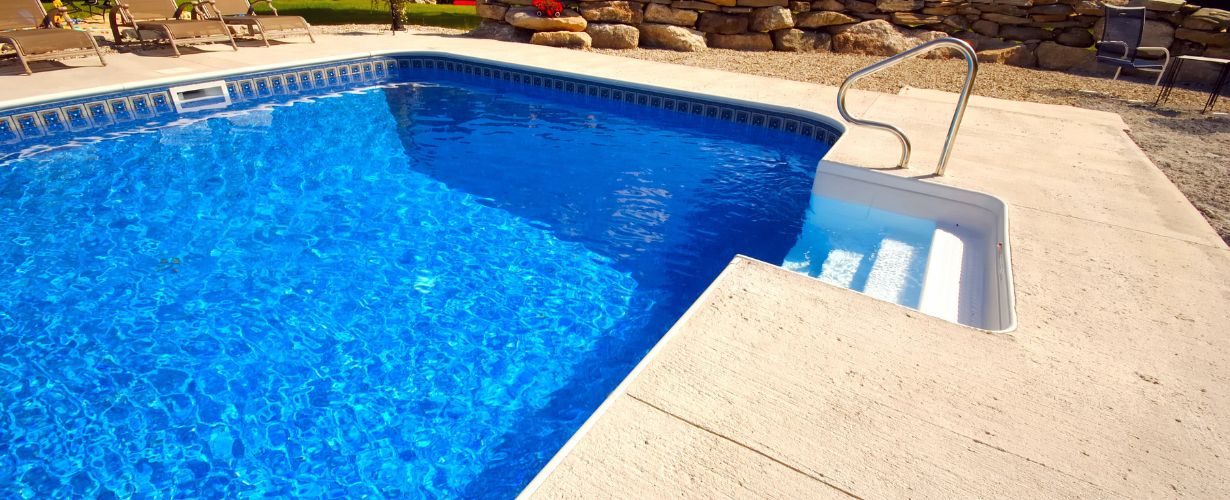
Florida’s climate brings challenges beyond just heat and slip resistance. Tropical storms can leave standing water and debris. High humidity encourages organic growth, while temperature swings—even here in Florida—cause materials to expand and contract. Pool chemicals splash and track onto decking. All of these factors matter when choosing the right surface.
Travertine stays cool because of its porosity, but that same porosity can let organic growth take hold in humid conditions. Regular cleaning helps prevent problems, but shaded areas or the rainy season require extra attention.
Concrete pavers drain water well when installed correctly, with proper gaps and base preparation. Their modular design allows water to flow instead of pool. However, poor installation—something we see too often—can create low spots that trap water and speed up wear.
Poured concrete tends to crack more in Florida than in stable climates. Our soil, shifting water table, and occasional cold snaps all put stress on slabs. Control joints help, but they don’t completely stop cracking.
Natural stone behaves differently depending on the type. Some develop attractive patinas over time, while others show water stains or organic growth that need regular care. Knowing how your specific stone reacts to Florida’s humidity helps avoid surprises.
Modern composite materials have solved many early problems with moisture and mildew in humid climates. They resist organic growth better, but it’s important to choose products designed for Florida conditions—some still aren’t up to the challenge.
Finally, hurricane debris is a Florida-specific concern. Pavers and modular materials usually recover better from storm damage; you can replace a few damaged pieces. A cracked concrete slab, however, often requires major repairs.
If budget isn’t a concern and comfort matters, travertine is worth the investment in Florida’s climate. It feels great underfoot, ages gracefully, and adds real value to your space.
For a balance of durability, design options, and reasonable cost, quality concrete pavers from trusted manufacturers are a smart choice. They handle Florida weather well and offer design flexibility that basic concrete can’t match.
If your budget is tight, poured concrete will get the job done, but it won’t make your pool area stand out. Plan for future resurfacing and be ready for ongoing maintenance.
If you love natural stone beyond travertine, work with professionals experienced with your chosen material in South Florida. Without proper guidance, beautiful stones can quickly become maintenance headaches.
If low maintenance is your top priority, and you’re okay with some compromises in appearance, modern composite decking performs better than many critics suggest.
The biggest mistake is choosing materials based only on cost per square foot. True value comes from considering climate performance, upkeep, aesthetics, and long-term benefits. Your deck isn’t just a surface—it’s a key part of your outdoor living space and your home’s overall value.
A good professional will guide you through these decisions honestly. They’ll show real examples of each material in Florida conditions, explain what maintenance really involves, and help you see how your choice fits your vision.
When you pick materials suited to Florida’s climate, your pool deck will last for decades, complement your lifestyle, and enhance your home’s value. The goal is an outdoor space you’ll enjoy, not one you’ll just have to maintain.
About the Author:
Henry Pierce is co-owner of aquaelitepool.com, and he brings 15+ years in luxury construction expertise to Aqua Elite Pool, combining engineering precision with designs that transform ordinary spaces into environments where families naturally gather and memories happen. When he’s not building pools, he spends time with his family, reading good books or playing tennis.
Get Your Custom Pool & Spa Quote
Free 3D design and Financing options.