How to Cool Down Your Pool When It Gets Too Hot
In the height of a relentless summer, your swimming pool, the ultimate symbol of relief, can quickly transform into a thermal bath. For homeowners in tropical climates, this transition happens with frustrating speed. Once water temperatures breach the 90°F threshold, the experience shifts from a refreshing sensory reset to a stifling, lukewarm chore.
However, an overheating pool is more than a discomfort; it is a chemical crisis. High temperatures accelerate sanitiser depletion and trigger rapid algae blooms, putting both your water quality and your pool’s structural finish at risk. For the luxury pool owner, the goal is to reclaim that perfect 78°F to 82°F equilibrium without incurring astronomical utility bills or compromising your backyard’s aesthetic. Achieving this requires a sophisticated blend of physics and modern aquatic technology.
Why Your Pool is Overheating: The Thermal Load Factor
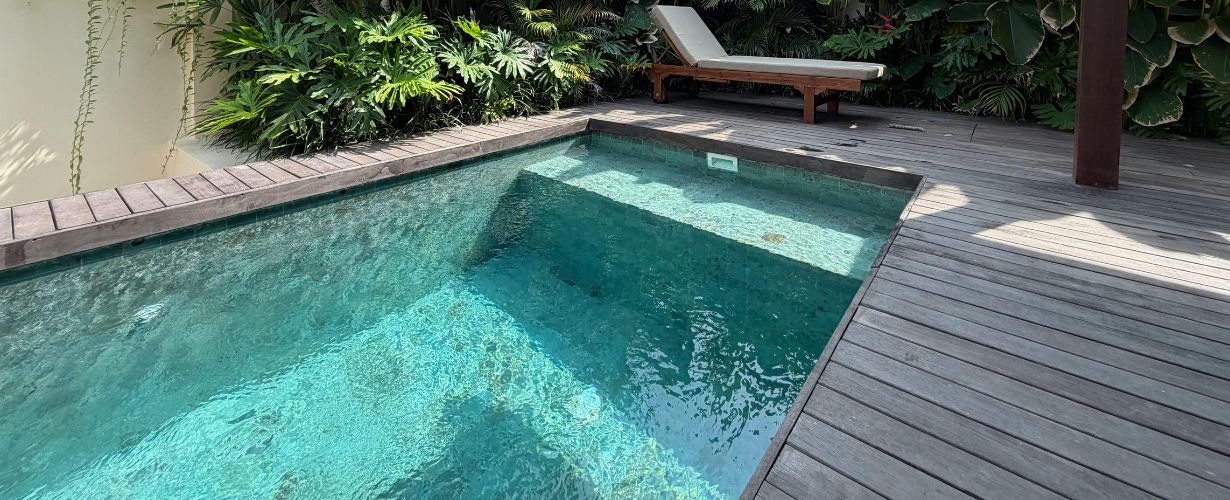
To effectively cool a pool, we must first understand the thermal load. Your pool is a massive thermal battery that gains heat through three primary channels. Understanding these is the first step towards reclaiming your water temperature.
1. Direct Solar Radiation (The Greenhouse Effect): UV rays penetrate the water surface and are absorbed by the pool’s finish. Darker finishes (like midnight blue or graphite) absorb significantly more heat than white or light grey finishes. This energy heats the floor and walls of the pool, which then radiate heat back into the water throughout the day and well into the night.
2. Atmospheric Conduction: This is the transfer of heat from the air to the water. When the ambient temperature is 100°F and your pool is 85°F, the air is constantly pushing heat into the water. This is particularly aggressive in areas with little wind, as a stagnant layer of hot air sits directly on the water surface.
3. The Humidity Block (Latent Heat): In high-humidity regions, the air is already saturated with moisture. This prevents evaporative cooling the natural way a pool sheds heat. Under normal conditions, as water evaporates, it takes a significant amount of heat energy with it. When the humidity is high, the water cannot sweat, causing the heat to stay trapped in the basin.
1. Advanced Mechanical Chilling: The Gold Standard
If you want precise control over your water temperature, mechanical chillers are the only set-it-and-forget-it solution. For a luxury pool, relying on the weather is not an option; you need an engineered solution.
Electric Water Chillers
Unlike heaters, chillers utilise a refrigerant cycle to strip heat from the water. As your pool water passes through the heat exchanger, the heat is transferred to a refrigerant gas and then exhausted into the atmosphere via a powerful fan.
- The Benefit: You can maintain a consistent 78°F regardless of whether it is 105°F outside.
- The Consideration: These units require a dedicated electrical circuit and professional hydraulic integration to ensure they don’t restrict water flow to your pumps.
Reversible Heat Pumps
Many homeowners are now opting for dual-purpose units. In the spring and autumn, they heat the water; in the dog days of summer, they reverse the flow of refrigerant to act as a chiller. This is the most versatile investment for a year-round outdoor lifestyle. It is important to note that a reversible heat pump is slightly less efficient at cooling than a dedicated chiller, but its multi-season utility often outweighs the difference.
2. Leveraging Aeration: The Power of Surface Tension
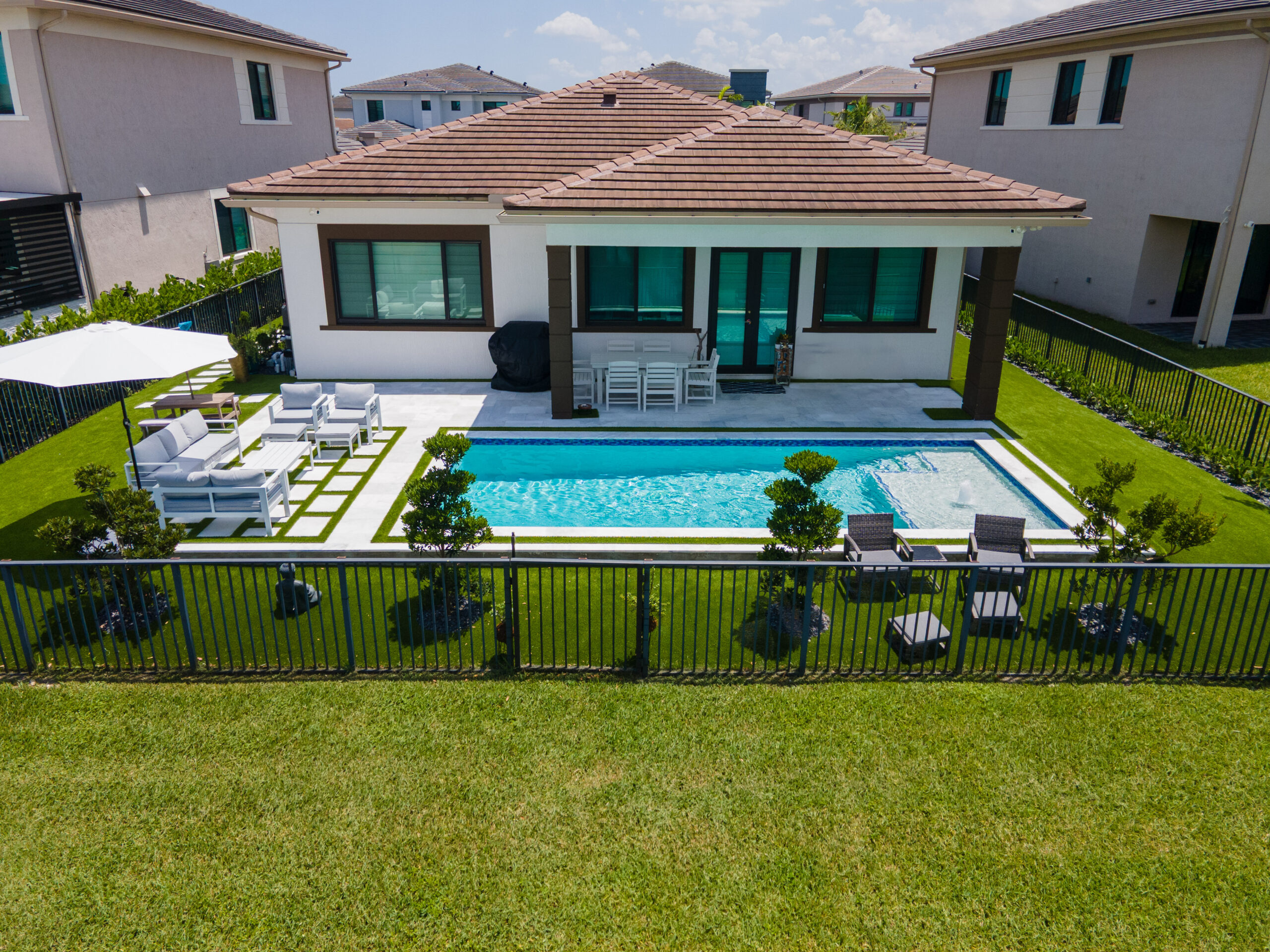
Aeration is the process of increasing the water’s contact with the air. By breaking the surface tension and sending droplets into the atmosphere, you trigger a phase change that releases heat.
Deck Jets, Laminars, and Sconces: These aren’t just for aesthetics. By running your deck jets at night, you can drop your pool temperature by 3 to 5 degrees. The key is the hang time of the water in the air. The longer the water is airborne, the more heat it can shed.
Dedicated Professional Aerators: These are specialised attachments that connect to your return line. They spray a high-pressure fine mist over the pool. Because the droplets are small, they have a high surface-area-to-volume ratio. This makes them incredibly efficient at cooling via evaporation. For the best results, these should be installed on the side of the pool that receives the most wind.
3. Strategic Circulation: The Night shift protocol
Running your pool pump during the day is necessary for filtration, but it’s the worst time for cooling. During the day, the pump moves water through pipes that may be sitting under hot concrete or in the sun, actually adding heat to the system before it even reaches the pool.
The Strategy:
- Peak Cooling Window: Set your automation system to run water features and high-speed filtration.
- Thermal Exchange: During these hours, the ambient air temperature is at its lowest. The constant movement of water through your fountains and over your spillways allows the heat to escape into the cool night air.
- Variable Speed Pumps: Use a variable speed pump at a higher RPM during the night to maximise the volume of water being aerated, then drop to a lower, energy-saving RPM during the day just for basic chemical distribution.
4. Architectural Shading and Micro-Climates
Shade is the most effective passive cooling method. By preventing the sun’s rays from hitting the water, you stop the heat gain before it ever begins.
High-Performance Sail Shades
Modern sail shades are engineered from high-density polythene (HDPE) fabric. They block up to 95% of UV rays while allowing air to circulate freely. Placing these strategically over the shallow end or sun shelves where the water is thinnest and heats up the fastest can significantly reduce the overall thermal gain of the entire pool.
Automated Louvered Pergolas
For luxury estates, an automated louvred pergola offers the best of both worlds. You can close the louvres during the heat of the day to protect the water and open them at night to allow heat to rise and dissipate. This architectural addition also creates a comfortable poolside lounge area, reducing the heat reflected from the deck into the water.
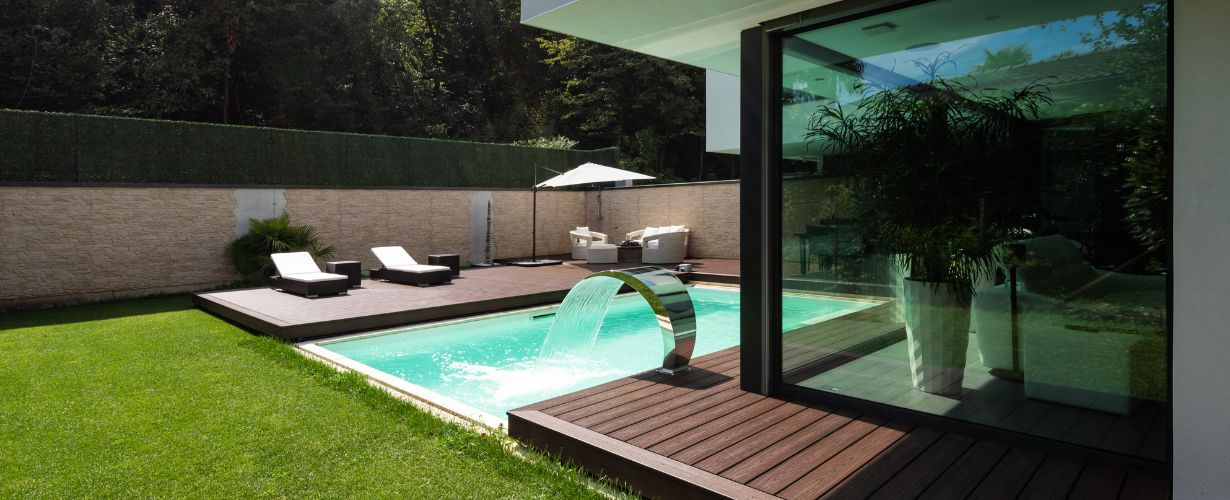
Cooling Strategy Efficiency & Investment Matrix
| Strategy | Temp Reduction | Initial Investment | Operating Cost | Best For |
|---|---|---|---|---|
| Reversible Heat Pump | 5°F - 10°F | High | Moderate | Year-round use |
| Night Aeration | 2°F - 5°F | Low | Low | Budget-Friendly |
| Sail Shades | 3°F - 7°F | Moderate | Zero | Long-term Prevention |
| Cooling Tower | 8°F - 12°F | Moderate | Moderate | Dry/Low-Humidity |
| Night Circulation | 2°F - 4°F | Zero | Low | Efficiency |
5. The Critical Role of Evaporative Cooling Towers
Cooling towers are often used in commercial applications but are becoming more popular in residential luxury pools. They work by dropping water through a series of honeycomb baffles while a high-velocity fan blows air in the opposite direction.
This creates a massive amount of evaporation in a very small space. In regions with lower humidity, a cooling tower can be almost as effective as an electric chiller but at a fraction of the electricity cost. For Florida owners, these are best used in the late evening when humidity levels often dip slightly compared to the midday peak.
6. Managing Water Chemistry in High-Heat Scenarios
Hot water isn’t just uncomfortable; it’s chemically demanding. As water temperature rises, the rate of chemical reactions increases, leading to thirsty water that consumes sanitiser at an alarming rate.
Algae Bloom Acceleration
Algae thrives in water above 85°F. If your pool hits 90°F, you may need to increase your chlorine output or salt cell production by 20-30% just to stay ahead of organic growth. Warm water also holds less dissolved oxygen, which creates an environment where certain types of resistant algae can flourish.
LSI Balance (Langelier Saturation Index)
Heat affects the calcium solubility in your water. If the water gets too hot, it becomes scale-forming. This leads to white, crusty deposits on your tile, inside your salt cell, and most dangerously inside your heater’s internal components. Monitoring your LSI during a heatwave is crucial to protecting your equipment.
The Stabilizer Shield (Cyanuric Acid)
Ensure your cyanuric acid (CYA) levels are between 30 and 50 ppm. Think of CYA as sunscreen for your chlorine. Without it, the intense summer UV rays will burn through your free chlorine in a matter of hours, leaving your pool unprotected during the hottest part of the day.
7. Passive Cooling Through Landscaping and Hardscapes
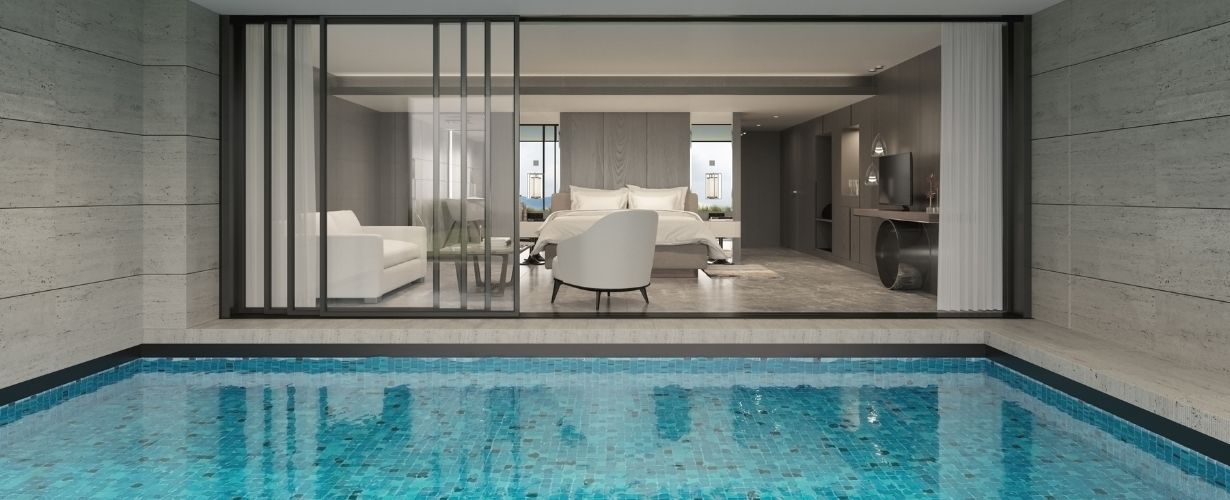
The environment surrounding your pool acts as a heat sink. Materials like dark concrete, brick, or stone pavers can reach temperatures of 140°F, radiating that heat directly into your pool water through a process called thermal bridging.
- Cool-Deck Coatings: Applying a specialised reflective coating to your pool deck can reduce surface temperatures by up to 20 degrees. This keeps the surrounding area cool and prevents the deck from heating the pool’s concrete shell.
- Strategic Planting: Planting tall palms, privacy hedges, or bamboo on the western side of the pool provides natural shade during the hottest part of the afternoon (3:00 PM to 6:00 PM) without dropping excessive debris into the water.
- Turf vs. Stone: Replacing stone borders with high-quality turf (natural or synthetic with cooling infill) reduces the amount of heat reflected back onto the water surface.
8. Debunking the Myths: Why Ice and Refills Fail
Many DIY guides suggest quick fixes that simply don’t hold up to the laws of thermodynamics.
- The Ice Myth: To cool a standard 15,000-gallon pool by just 1 degree Fahrenheit, you would need roughly 1,500 pounds of ice. The cost is astronomical, the logistics are a nightmare, and the effect would vanish within an hour.
- The Cold Water Refill: Many owners try to drain a few inches of water and refill it with cool tap water. However, in southern climates during July, the water coming out of your house is often already 78-82°F. You would have to waste thousands of gallons of water to achieve a negligible 1-degree drop in temperature.
Conclusion: Engineering the Perfect Swim
A temperature-controlled pool is the result of a deliberate strategy involving both heat prevention and energy extraction. Through the integration of architectural shading, reflective cool-decking, and high-performance mechanical chillers, you can sustain a crisp environment regardless of the external forecast. Relying on night-time aeration and strategic circulation ensures that your water remains an inviting escape rather than a maintenance burden.
At Epic Water Shapes, we specialise in the engineering of elite aquatic environments that balance aesthetic beauty with peak thermal performance. Whether you are looking to retro-fit an existing basin with advanced cooling technology or are in the early stages of a custom luxury build, our team is dedicated to ensuring your pool remains a true sanctuary of cool. Contact us today to consult with our design experts and explore the future of high-performance, luxury outdoor living.