How Does a Saltwater Pool Work?
Choosing the right water system is one of the most important decisions when planning a new pool. Many homeowners look for a swimming experience that feels luxurious, requires less daily effort, and avoids the harsh side effects of traditional pool chemistry. This is why saltwater pools have become highly popular for high-end properties.
There is a common misunderstanding that saltwater swimming pools are completely chemical-free or that they contain thick, salty ocean water. In reality, these systems use an automated process to produce chlorine for pool sanitation.
Understanding how the system works can help you decide whether a saltwater pool is right for your home.
Are Saltwater Pools Chlorine-Free?
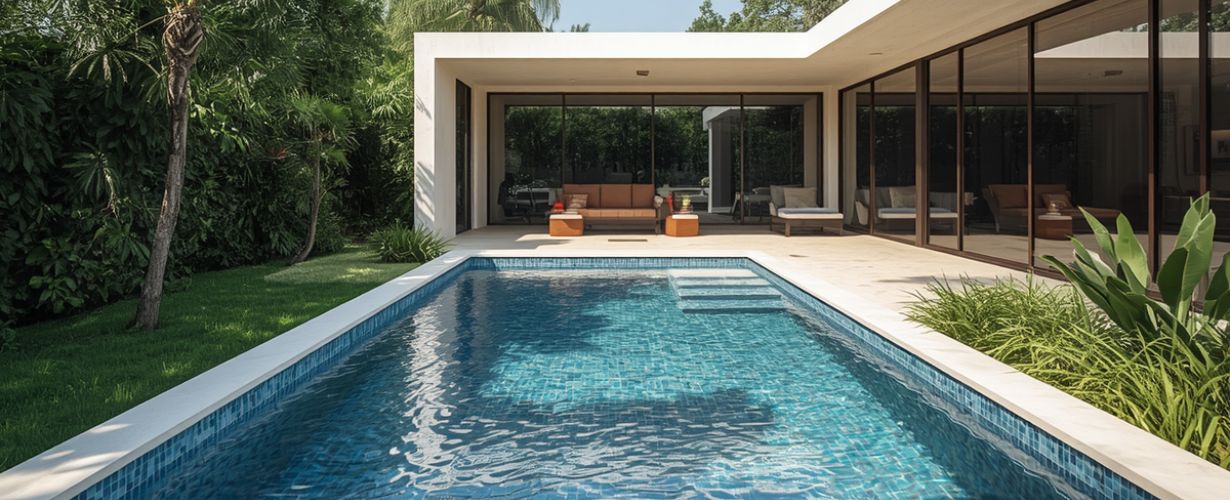
The shortest answer is no. A saltwater pool is not a chlorine-free pool. It contains the exact same sanitising agent used to keep traditional swimming pools clean and safe from bacteria or algae.
The real difference lies in how that sanitizer gets into the water:
- Traditional Pools: You must purchase heavy buckets of chlorine tablets, liquid, or powder. You manually measure and pour these chemicals directly into the water or place tablets into a plastic floater.
- Saltwater Pools: You add pure, natural pool salt directly to the water. A specialized piece of machinery uses that salt to manufacture pure chlorine automatically right inside your plumbing lines.
Discount Salt Pool
Because the system generates its own sanitizer on a continuous loop, you avoid the chemical spikes, strong chemical smells, and constant shopping trips associated with traditional pool upkeep.
Main Parts of a Saltwater Pool System
A saltwater pool utilizes your standard pump and filtration setup, but it adds two critical pieces of technology to your equipment pad: the control module and the salt cell.
1. The Control Module : The control module is an electronic panel mounted near your pool equipment. It regulates how much electricity flows into the system. It allows you to adjust the chlorine production percentage based on factors like hot weather, heavy pool use, or heavy rain. Many modern premium control panels display your exact water salinity level and feature automated safety shut-offs.
2. The Salt Cell : The salt cell is an inline plastic housing plumbed directly into your pool’s return line, right after the heater and filter. Inside this cell sits a series of solid titanium plates coated with a rare metal called ruthenium. As pool water flows between these plates, the chlorine-generation process begins.
How a Saltwater Pool Generates Chlorine
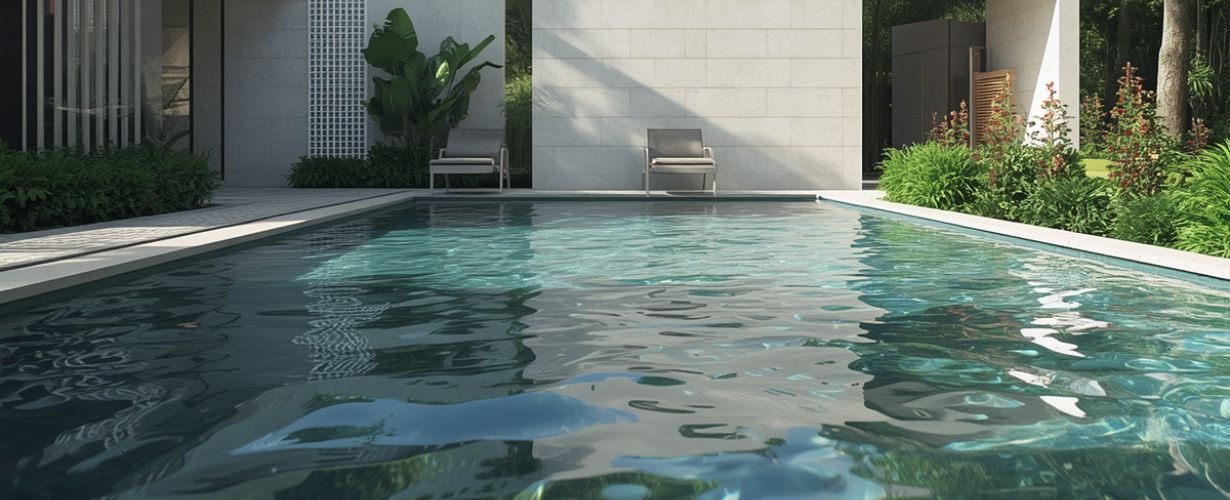
The entire process is a continuous, self-recycling scientific loop that happens silently behind the scenes while your filtration pump runs.
Step 1: Adding the Salt
Pure, non-iodised pool salt is poured directly into the water and allowed to dissolve completely. The target salinity level for a standard residential pool is usually between 3,000 and 4,000 parts per million (ppm).
To put this in perspective, human tears have a salinity level of about 9,000 ppm, while the ocean sits at a heavy 35,000 ppm. The salt level in a backyard pool is so low that you can barely taste it. It feels completely soft and smooth to the touch.
Step 2: Running Through the Cell
As your main pool pump pushes the salt water through the plumbing, it passes directly through the gaps between the titanium plates inside the salt cell.
Step 3: Electrolysis
The control module sends a safe, low-voltage electrical current down into the titanium plates. When this electricity passes through the moving salt water, it triggers a scientific process called electrolysis.
The electrical energy splits the dissolved salt molecules (sodium chloride) and water molecules apart. This reaction instantly creates hydrogen gas and hypochlorous acid. The hydrogen gas simply escapes into the air as tiny, invisible bubbles, while the hypochlorous acid dissolves directly into the water as a pure, active chlorine sanitiser.
Step 4: Water Returns to the Pool
The newly sanitised water flows out of the cell, travels through your return jets, and mixes into your swimming pool. It immediately goes to work destroying bacteria, neutralising organic debris, and preventing algae growth.
Step 5: The Automatic Recycle Loop
This is the most impressive part of the entire system. Once the generated chlorine finishes its job fighting off bacteria or reacting to sunlight, it doesn’t just disappear. The chemical breakdown causes the molecules to reform right back into standard sodium chloride (salt).
The salt remains dissolved in the water, travels back to the equipment pad, passes through the cell, and the entire creation process repeats itself.
Note on Salt Levels: Because the salt constantly recycles itself, you do not need to add bags of salt every week. The only times your pool actually loses salt are through water splashing out, heavy rain overflow, or draining the pool for maintenance.
Saltwater vs. Traditional Chlorine Pools
When deciding whether to install or convert to a saltwater system during a pool remodel, comparing the two methods side-by-side helps clarify the long-term benefits.
| Feature | Saltwater Pools | Traditional Chlorine Pools |
|---|---|---|
| Sanitizer Source | Natural pool salt transformed by an electronic cell | Manufactured chemical tablets, liquid, or shock |
| Water Feel | Soft, smooth, and gentle on the skin and eyes | Can feel harsh or drying to sensitive skin |
| Chemical Odor | Virtually none; no strong chemical smells | Higher risk of strong chemical odor from chloramines |
| Daily Upkeep | Highly automated; check levels periodically | Frequent manual testing, adding, and buying chemicals |
| Upfront Cost | Higher initial investment for equipment installation | Low initial cost; standard equipment only |
| Long-Term Chemical Cost | Much lower; salt is highly affordable and recycles | Higher; constant purchasing of commercial chlorine |
| Cell Lifespan | Salt cell requires replacement every 3 to 7 years | No cell component to replace |
Benefits of Saltwater Pools
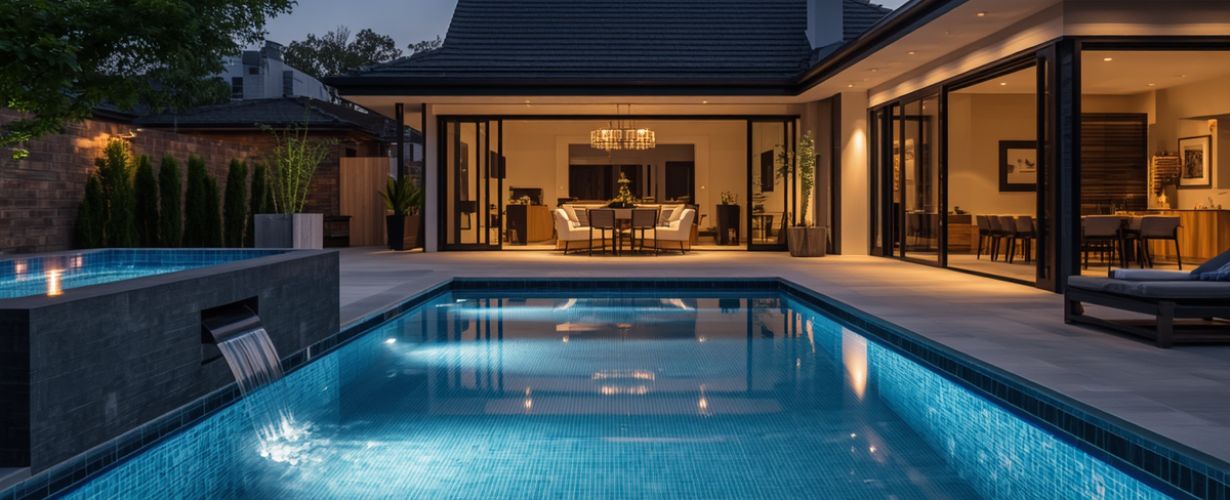
Most people notice an immediate difference the moment they step into a saltwater pool. Traditional pools often suffer from a buildup of chloramines, which form when chlorine binds with organic matter like sweat or sunscreen. Chloramines are the true culprits behind red eyes, itchy skin, dry hair, and that heavy chemical smell often associated with public pools.
Because the concentration of chlorine inside the electronic salt cell is incredibly high, it naturally burns away these irritating chloramines before the water ever returns to the main pool. Combined with the low levels of dissolved salt, the water feels silky smooth, mimicking the natural chemistry of your body. It is highly comfortable for young children, athletes, and anyone with sensitive eyes or skin conditions.
Key Maintenance Tips for Saltwater System Owners
While these systems save an immense amount of daily labor, they are not completely maintenance-free. To maximize the lifespan of your equipment and keep your pool sparkling clear, follow these basic practices.
Check the pH Level
The electrolysis process that takes place inside a salt cell naturally causes the pH level of your water to slowly rise over time. High pH can lead to cloudy water or scale buildup on your pool finish. Check your pH levels weekly, keeping them between 7.2 and 7.6. Adding small amounts of muriatic acid when necessary keeps the balance perfect.
Check for Calcium Scaling
Because of the high heat and electrical energy inside the salt cell, calcium can drop out of the water and form a hard, white crust on the internal titanium plates. This is known as scaling.
Many high-end systems feature a reverse polarity function that automatically cleans the plates by switching the electrical current backward. However, it is still wise to visually inspect the inside of your cell every three months. If you notice white crust blocking the plates, a quick rinse with a mild, diluted acid solution will restore full efficiency.
Maintain Proper Salt Levels
If your salt levels drop too low (usually below 2,700 ppm), the control module will display a warning light and stop generating chlorine to protect itself. Conversely, letting salt levels spike too high (above 5,000 or 6,000 ppm) does not make the pool cleaner; instead, it can cause unnecessary wear on metal fixtures like handrails or heater elements.
Maintain Your Stabilizer (Cyanuric Acid)
Just like a traditional pool, outdoor saltwater pools need cyanuric acid, often called stabilizer or conditioner. This acts as a sunblock for your clean chlorine. Without proper stabilizer levels, the intense summer sun can destroy your generated chlorine faster than the cell can produce it, causing your system to work twice as hard.
Conclusion
A saltwater chlorination system represents a higher upfront investment for the control panel and cell equipment. However, the long-term rewards make it the premier choice for custom, high-end backyards. This system eliminates the need for heavy chemical buckets, minimizes tedious weekly maintenance routines, and protects your family from the harsh side effects of traditional chlorine.
When you design a luxury pool, the water quality should match the craftsmanship of the structure itself. Professional design and precise installation ensure your sanitation system is perfectly sized for your pool’s specific architecture and water volume.
Contact us today to explore how advanced automation can elevate your everyday swim experience and transform your custom water shape into a true low-maintenance oasis.